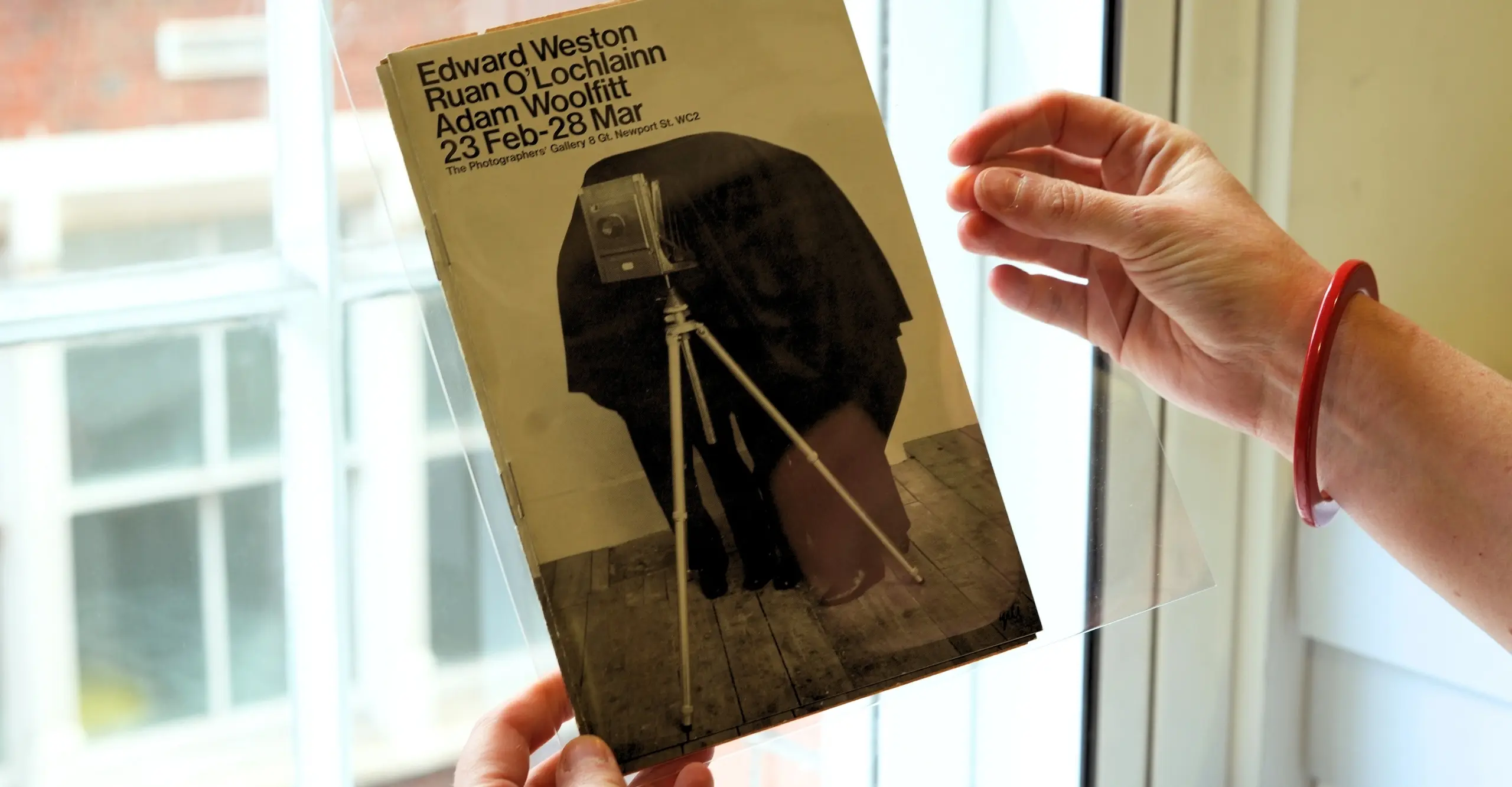
The course is a terrific introduction to the world of archiving. This six-week programme offers valuable insights into what an archive is, why it matters, and how to create one.
- Participant from 2025's Starting an Archive course
Thinking about how to start an archive? Want to update your existing knowledge on how you organise and preserve your collection?
Get to know the key areas to consider when setting up, managing and safeguarding an archive. See examples of a range of archives and learn how archives have changed since the advent of the digital age.
Course Format
All sessions are recorded so if you miss any live sessions you can watch them back at any time.
Over six weeks, this practical course explores what it means to archive material today — working with physical and/or digital material.
- Course leader Kathryn Tollervey starts by exploring the need for an archive and who it is for.
- Then we look at the processes of organisation, digitisation and preservation for both digital and physical material.
- This is followed by a discussion on the digital solutions best for different types of collections as well as guidelines on cataloguing and metadata.
- Throughout the course we focus on access, engagement and legacy of the archive.
Taking place weekly on Zoom, sessions include a blend of lectures and guest speaker presentations. Participants are provided with lecture slides and a list of resources for further study.
Who is this for?
Open to all, especially those who have inherited/been given a collection of materials and/or photographers/artists who are interested in the process of archiving their material, whether of personal value or historical public interest. Our courses are intended for anyone who is 18 or over. If you are under 18 years old and want to attend a course (either in-person or online) you must be accompanied by a parent or guardian for all of each session.
Ticketing
Please note: Our workshops and courses are subject to minimum enrolment. Please book within five days of the start-date to reduce the likelihood of course cancellation and to ensure you receive any additional workshop or course information well in advance. Registration will close one day prior to the start date of the session(s).
By booking for this event you agree to our Terms & Conditions.
Course Schedule
Week One: Introduction on Tue 15 Sep, 18.30–20.00 BST
An overview of the course and an exploration of the history and changing forms of archives. Guest Speaker: Luçjan Bedeni (National Museum of Photography “Marubi", Albania )
Week Two: Legacy on Tue 22 Sep, 18.30–20.00 BST
Why is there a need for an archive and who it is for? Any copyright implications and future possible contexts in how collections could be used. Guest Speaker: Michelle Wilson (Archive of Modern Conflict, London)
Week Three: Access on Tue 29 Sep, 18.30–20.00 BST
How to make archives available to different audiences and how to promote your archive. Introducing the use of open access and community involvement to increase reach and build stronger stories within archives. Guest Speaker: Jennifer Sobol (Bradford Family Album/ Impressions, Bradford)
Week Four: Physical Preservation and Storage on Tue 6 Oct, 18.30–20.00 BST
Introduction to different solutions & considerations for both digital and physical material. Guest Speaker: Martin Barnes (Victoria and Albert Museum, London)
Week Five: Digitisation and Born Digital on Tue 13 Oct, 18.30–20.00 BST
Introducing the debate on whether to digitise collections, in full or part. Practical guidelines in finding a suitable affordable platform and storing of digital assets. Guest Speaker: Martin Barnes (Victoria and Albert Museum, London)
Week Six: Cataloguing and Meta Data on Tue 20 Oct, 18.30–20.00 BST
An introduction and practical guidelines. Guest Speaker: Stef Dickers (Bishopsgate Institute, London)
Biographies
Guest Speaker: Lucjan Bedeni (National Museum of Photography “Marubi”, Albania)
Luçjan Bedeni is an artist, art historian, and curator whose practice unfolds at the intersection of photographic archives, critical historiography, and contemporary exhibition-making. Since 2012, he has served as director of the National Museum of Photography “Marubi” in Shkodër, where he has led the transformation of the former phototheque into a dynamic institution dedicated to the critical reinterpretation of photographic heritage.
Bedeni has curated and commissioned over 40 exhibitions that explore the relationship between image, power, and historical narrative. In 2021, Bedeni obtained a PhD in the History of Albanian Art with research on “Pietro Marubbi and the Birth of the First Photography Studio in Albania”. Bedeni’s work proposes the archive as an open and evolving structure—one that is continuously reshaped through curatorial interpretation, artistic intervention, and public engagement.
Guest Speaker: Michelle Wilson (Archive of Modern Conflict, London)
Michelle Wilson is an archivist and collections manager at the Archive of Modern Conflict (AMC), an organization based in London, dedicated to the collection and preservation of vernacular photographs, artefacts and other ephemera. Over the course of her career, she has overseen the planning and development of custom database solutions for a diverse range of collections, including the AMC, the Wes Anderson Archive and the Derry Moore Archive.
Guest Speaker: Jennifer Sobol (Bradford Family Album/ Impressions, Bradford)
Jennifer Sobol is Senior Creative Producer (Learning) at Impressions Gallery, Bradford, a charity that helps people to understand the world through photography and acts as an agent for change.
Jennifer is nationally recognised for her work connecting young people with photography, archives and heritage. In 2017 she oversaw No Man’s Land: Young People Uncover Women’s Viewpoints of the First World War, a Heritage Lottery funded project exploring collections at the Imperial War Museums, Peace Museum and the University of Leeds. This project was chosen by Heritage Lottery Fund from over 2,200 projects as an exemplary contribution to the WW1 Centenary, was showcased at the Houses of Parliament, and won the 2019 National Heritage Award from the Creative Learning Guild.
As part of Bradford 2025 UK City of Culture, Jennifer developed partnerships with leading archive and photography experts from across the UK as part of Bradford Young Curators. This 18-month mentoring programme supported nine young people to learn from specialists and connect with communities across Bradford to uncover family photos and stories, to create the nationally significant digital archive Bradford Family Album: bradfordfamilyalbum.org/
Guest Speaker: Martin Barnes (Victoria and Albert Museum, London)
Martin Barnes is Senior Curator of Photography at the Victoria and Albert Museum, London (V&A). He began working there in 1995 after gaining an MA in Art Museum Studies from the Courtauld Institute of Art. His special interests include early processes, cameraless and experimental photography, industry, photography exhibitions and museology, nature and the environment.
Martin has built the V&A collection, conceived the Photography Centre, and is currently lead curator for the digitisation and research project for the Royal Photographic Society (RPS) collection at the museum. He has curated numerous exhibitions with books, including: Twilight:Photography in the Magic Hour (2006); Shadow Catchers: Cameraless Photography (2010); Figures & Fictions: Contemporary South African Photography (2011); Curtis Moffat: Experimental Photography and Design 1923-1935 (2016); Camera-less Photography (2018); Into the Woods: Trees in Photography (2019) and Maurice Broomfield: Industrial Sublime (2021).
Guest Speaker: Stef Dickers (Bishopsgate Institute, London)
Stef Dickers is the Special Collections and Archives Manager at Bishopsgate Institute and has been responsible for the development of the Institute's collections, including an ever growing collection of around 500,000 photographic images in various renowned collections documenting feminist, LGBTQ+ and activist history in Britain. He qualified as an archivist in 2001 and started at the Institute in 2005. Previous to this, Stef worked in the archives of the London School of Economics and Senate House Library.
Course Leader: Kathryn Tollervey (The Photographers' Gallery, London)
Kathryn Tollervey is Archivist at The Photographers’ Gallery. She has twenty years’ experience working in photographic archives such as Foster + Partners (Norman Foster’s architectural studio, London) photographic & special collections archive, the Victorian high street photographer Edward Reeves’ Archive (Lewes) and the archives of celebrated American-photographer Lee Miller (Chiddingly, East Sussex).
Bursaries
Please note: All bursary places have now been allocated.
A number of partial bursaries covering 50 per cent of course fees will be awarded on a first come basis. Applicants who wish to be considered for a partial bursary should submit a statement (max. 500 words) to projects@tpg.org.uk, outlining how Starting an Archive would contribute to their professional development. Applications open from June 2026; successful applicants will be notified within a week of submission.
We actively encourage applications from groups who are currently underrepresented in the cultural sector in the UK. This includes people who identify as D/deaf, disabled* and neurodivergent; those with caring responsibilities; candidates from Black, Asian and ethnically diverse backgrounds; and arts and culture professionals desiring career development, prioritising independent artists, freelancers and those made redundant/at risk of redundancy since 2020.
*The Equality Act 2010 defines a disabled person as someone who has a physical or mental impairment, and the impairment has a substantial and long-term adverse effect on their ability to carry out normal day-to-day activities. Sharing that you are disabled will not be used in any way in judging the quality of your application.