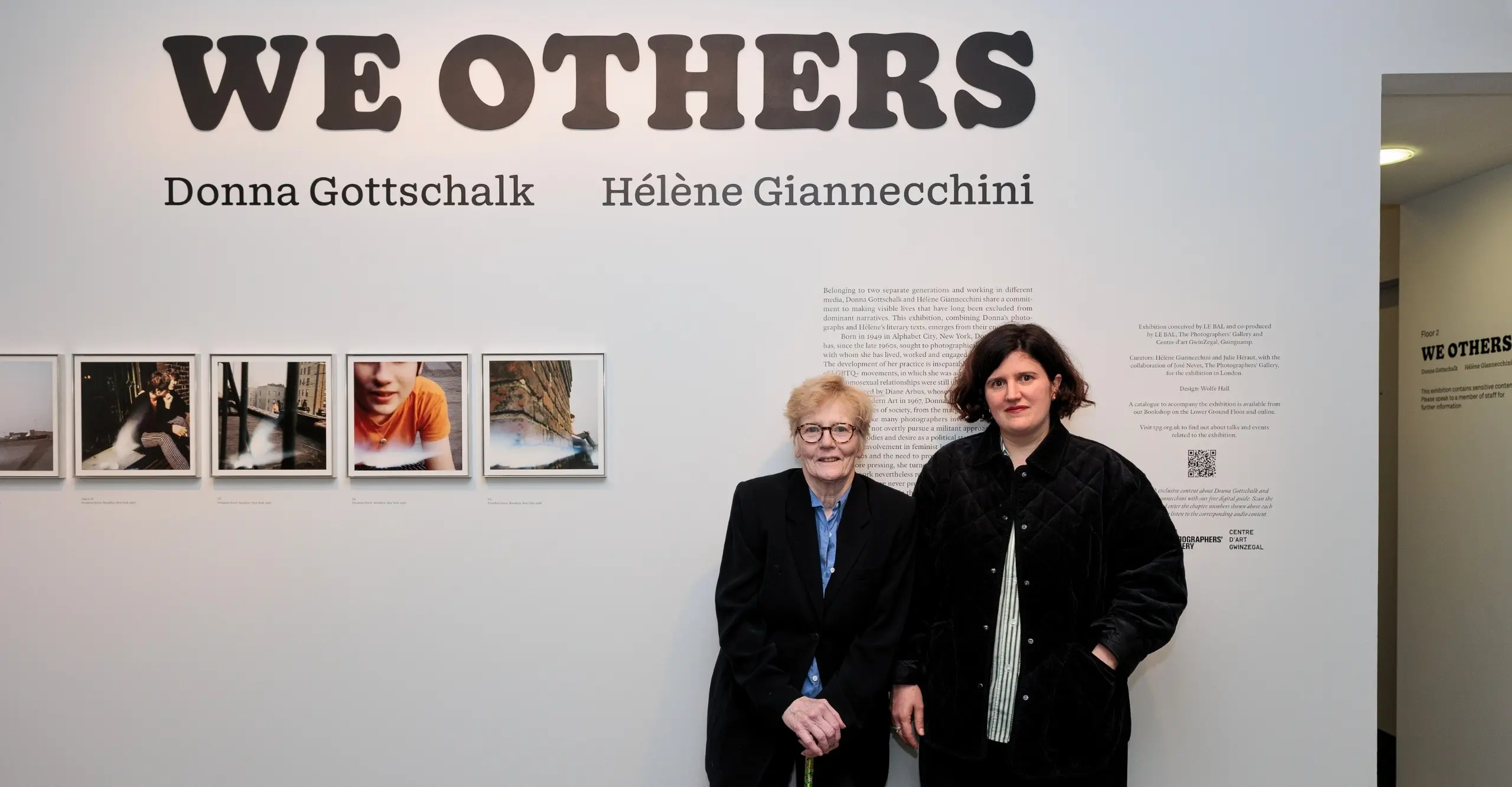
We Others emerges from a meeting between Donna Gottschalk and Hélène Giannecchini. It is not simply a collaboration but a convergence of practices. Photography and writing move together with a shared intention: to make visible lives that have long remained outside dominant narratives. Conceived as a single, cohesive work, the exhibition brings forward unseen photographs by Gottschalk, guided and reanimated by Giannecchini’s texts.
At the heart of this encounter lies a recognition that is reflected in Giannecchini’s written offerings in An Army of Lovers Cannot Fail, a newly published Fitzcarraldo edition. Her writing begins with a sense of absence that mirrors the conditions in which Gottschalk first made her images.
"There is a part of my history that I was never told… a part of my history was left unspoken... for a long time, I believed I did not exist”.
This aching absence goes beyond the personal. It is structural, tied to the erasure of queer, working-class and marginal lives from officialised histories. Both artists respond to this condition by building something else. Not a correction, but an expansion.
For Gottschalk, this begins in Alphabet City in the late 1950s. An NYC neighbourhood marked by poverty, violence and tight-knit communities, it becomes the ground from which her images grow. She photographs those closest to her: her mother in her beauty salon, her sisters, her brother, her friends. Later, her chosen family and fellow activists. “I wanted my people to be remembered,” she says. These are lives rarely represented, shaped by class, by gendered experience and often by both.
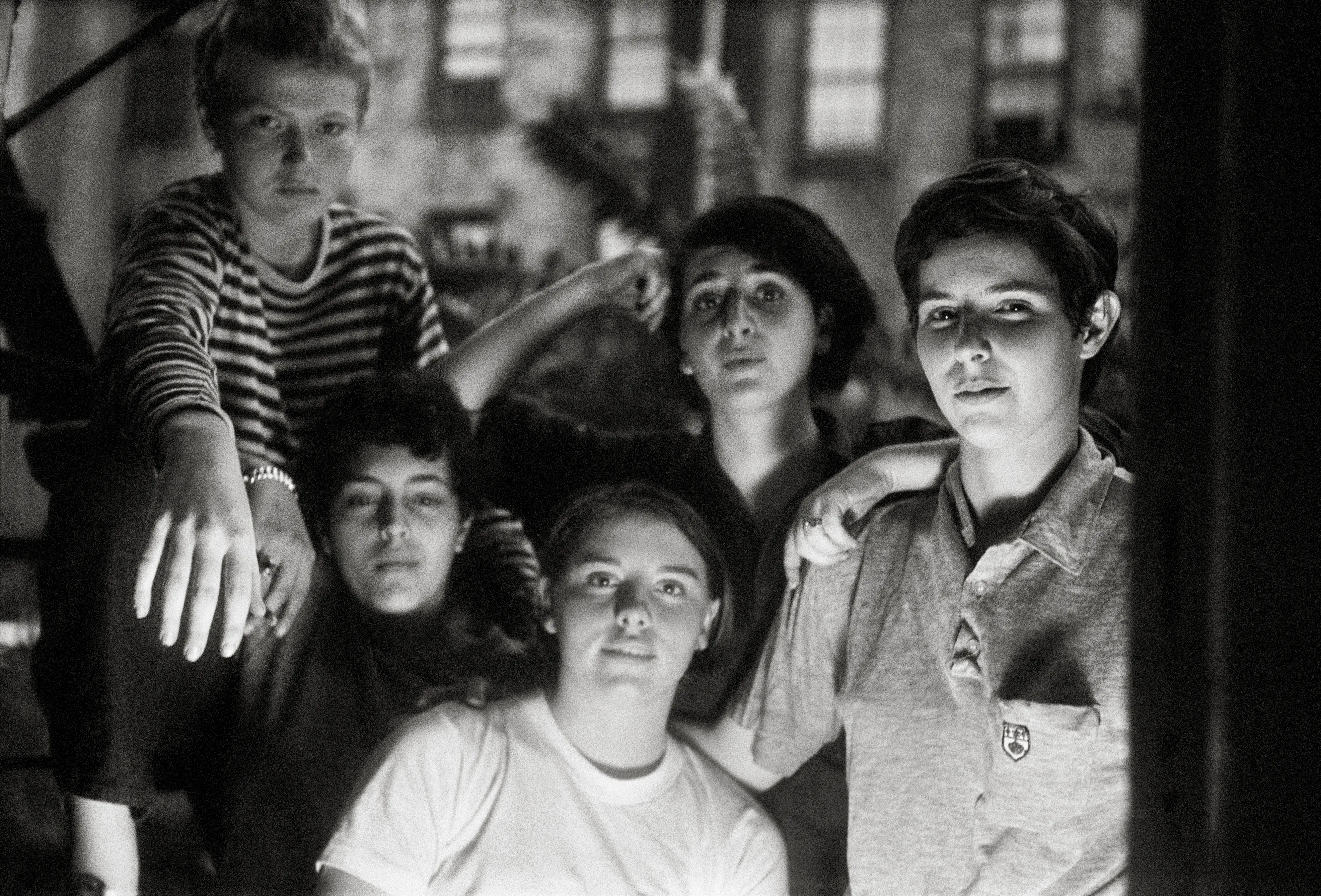
Chris, Oak, Binky and I, Baby Dykes, E. 9th Street, New York, 1969, Courtesy of the artist and Marcelle Alix, Paris © Donna Gottschalk
Giannecchini’s text echoes this impulse to gather and to name. “Knowing my own family was never enough for me. I had a need for other affiliations… affiliations that had nothing to do with blood”. What Gottschalk photographs, Giannecchini seeks in language. Both are engaged in assembling a lineage that is not inherited but chosen.
The historical context that surrounds Gottschalk’s work is not incidental. In the United States of the 1960s, homosexual relationships were still criminalised. In New York, people could be arrested for not wearing clothing aligned with their assigned gender. The 1969 uprising at the Stonewall Inn marked a rupture. Gottschalk, then a young woman, became involved in the Gay Liberation Front, a movement that sought not only rights but new ways of living, new forms of family.
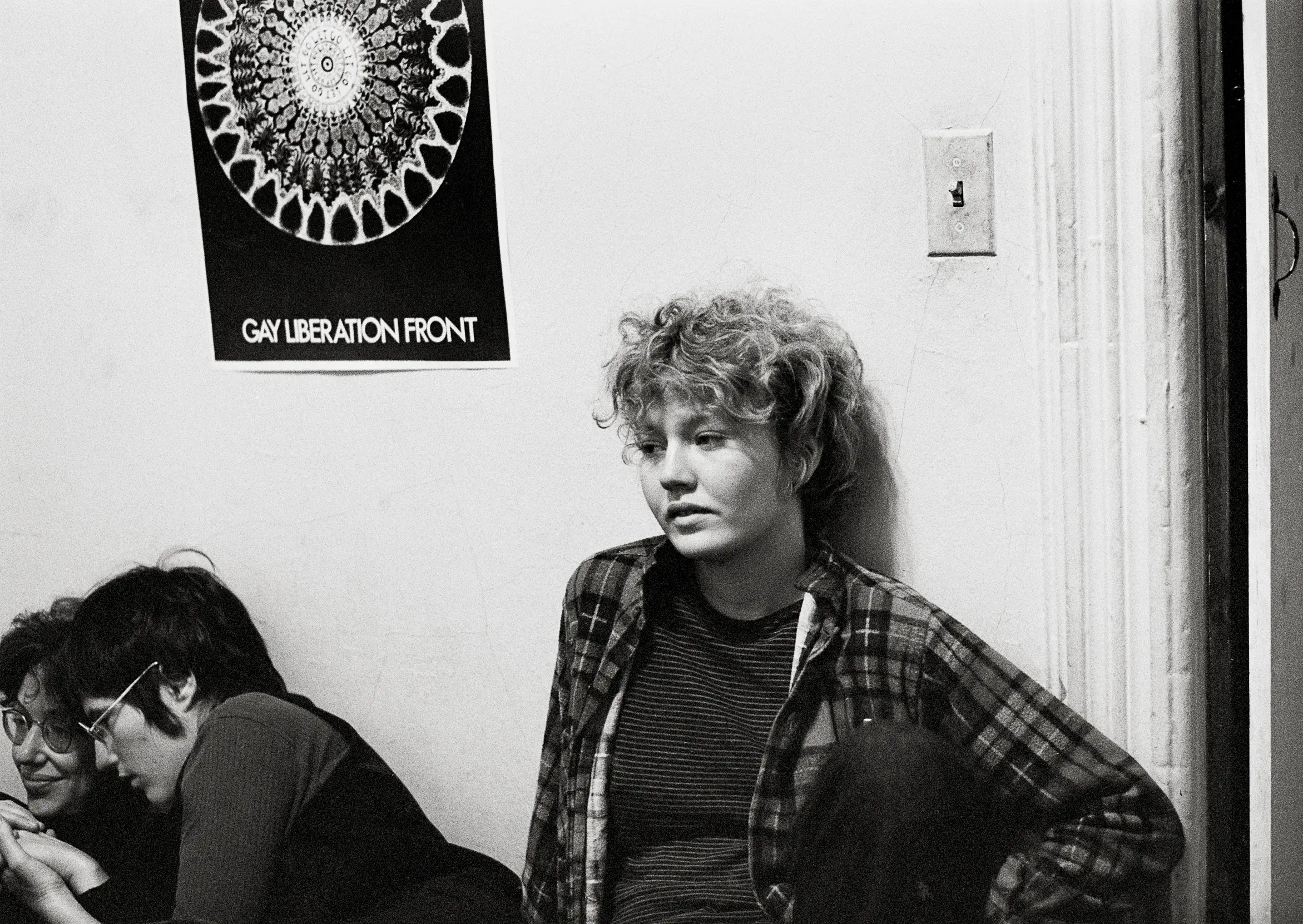
A Self-portrait during a GLF meeting, E. 9th Street, New York, 1970, Courtesy of the artist and Marcelle Alix, Paris © Donna Gottschalk
Yet her photography does not centre the spectacle of protest. As she later reflected, she was “more interested in the people.” This distinction is crucial. Her images do not document events as much as they hold relationships. They remain close, attentive, often quiet. They show what persists beyond the moment of demonstration: intimacy, care and the fragile structures of everyday life.
Giannecchini identifies this attention as a form of resistance. Writing about Gottschalk’s archive, she describes carrying the photographer’s negatives across the Atlantic as if they were a living inheritance: “entire lives, traces of a history that unfolded before my birth… but that I was sure was somehow also mine”. The photographs exceed their moment and become part of a shared, ongoing history.
The visual story that unfolds in We Others spans roughly from the 1960s to the late 1970s. It is a story of friendship, chosen family and emancipation, but also of disappearance. By the end of the 1970s, many of the people Gottschalk had photographed were no longer there. Some had died; others had drifted away. Her practice shifted. It became harder to photograph. What remained was the archive, carefully preserved, revisited, printed again over time.
Giannecchini’s writing attends to this fragility. “It is a story that is still being written, still being reconstructed from often fragile traces, and must extricate itself from silence and from shame”. The photographs are not stable documents. They are fragments, vulnerable to loss, dependent on acts of care and transmission.
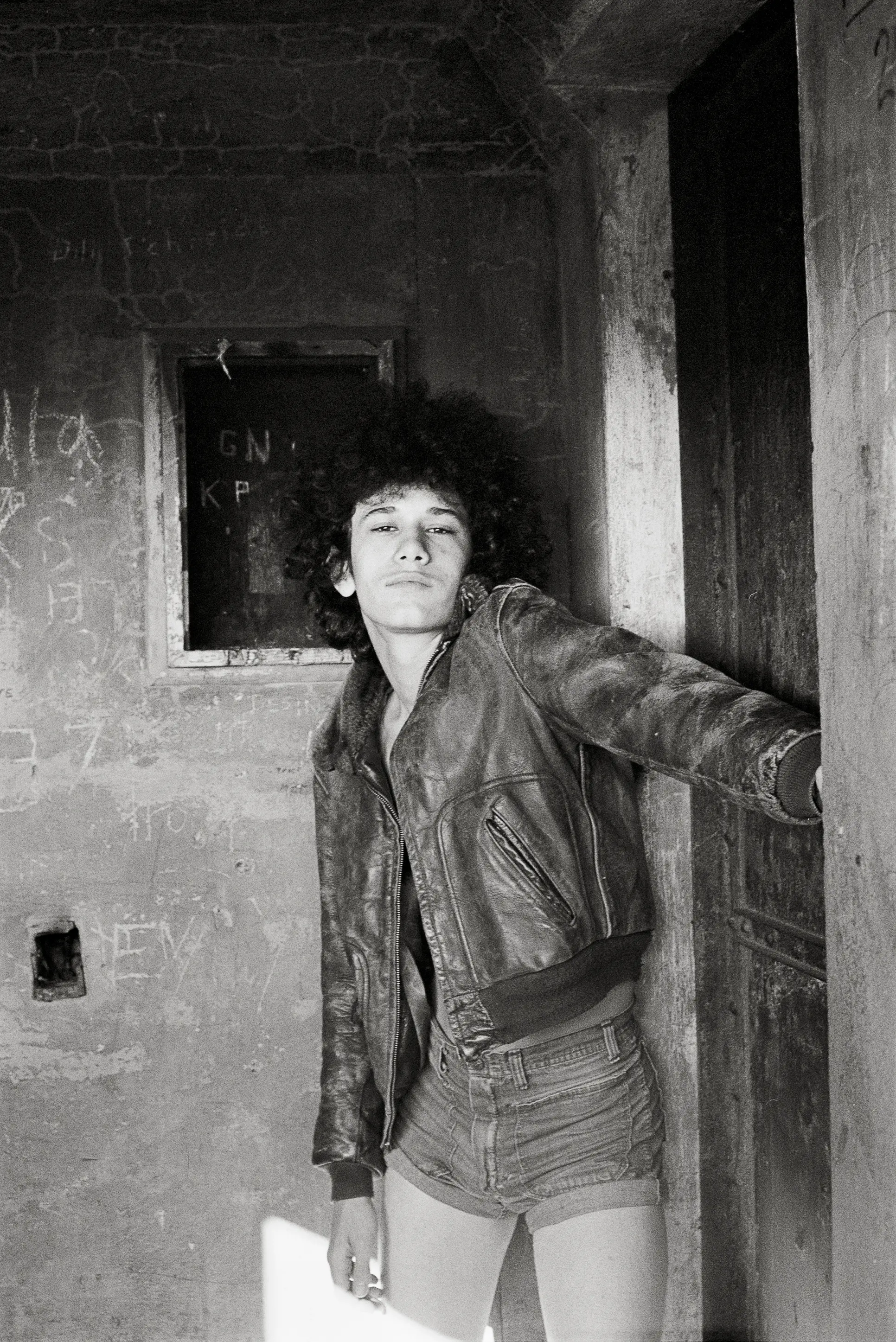
Myla, 16 years old, Mission District, San Francisco, 1972, Courtesy of the artist and Marcelle Alix, Paris © Donna Gottschalk
This is especially visible in the images of Myla, Gottschalk’s younger trans sister. Their relationship unfolds across decades of photographs. It is collaborative, deliberate. Together they decide how Myla will appear. In these images, she occupies the frame with confidence and presence. Photography becomes a space of self-determination. A way to exist visibly, on one’s own terms.
Giannecchini understands this not only as representation but as a form of kinship. “I created another family for myself… I chose all of its members. I was the one who composed my lineage”. In We Others, Gottschalk’s images enter this expanded family. They are not distant documents but active participants in a shared history.
Friendship, in this context, becomes central. Not as a secondary relation, but as a structure that holds these lives together. Giannecchini returns to it insistently: “Friendship saves us. It is a founding principle, a fortification… it is a political force”. This statement resonates deeply with Gottschalk’s practice. Her photographs rarely isolate individuals. They show connections, gestures of care, moments of proximity. They document what it means to live alongside others, to build support where institutional structures fail.

Hélène Giannecchini at We Others exhibition opening in The Photographers Gallery © Heather Shuker
The exhibition also reflects on the conditions under which these images were made and preserved. Gottschalk developed her own negatives, built darkrooms in her apartments and kept her work within circles of trust. This was not only practical. It was political. It allowed her to maintain control over her images and protect the people within them. Quietly, she built what Giannecchini might call “a family of a different sort, expansive and political”.
In bringing these photographs into the present, We Others asks us what it means to encounter them now. Giannecchini’s voice guides us through the images whilst adding in her own response to them. She reflects on what it would have meant to see such photographs earlier in her life, to recognise oneself within them. The absence she describes at the beginning of An Army of Lovers Cannot Fail is, here, partially repaired.
Younger queer audiences have notably responded to the exhibition with a similar intensity. They recognise in these images a history of love, resistance and mutual support. They also express a desire to produce and control their own images, to continue this work of transmission.
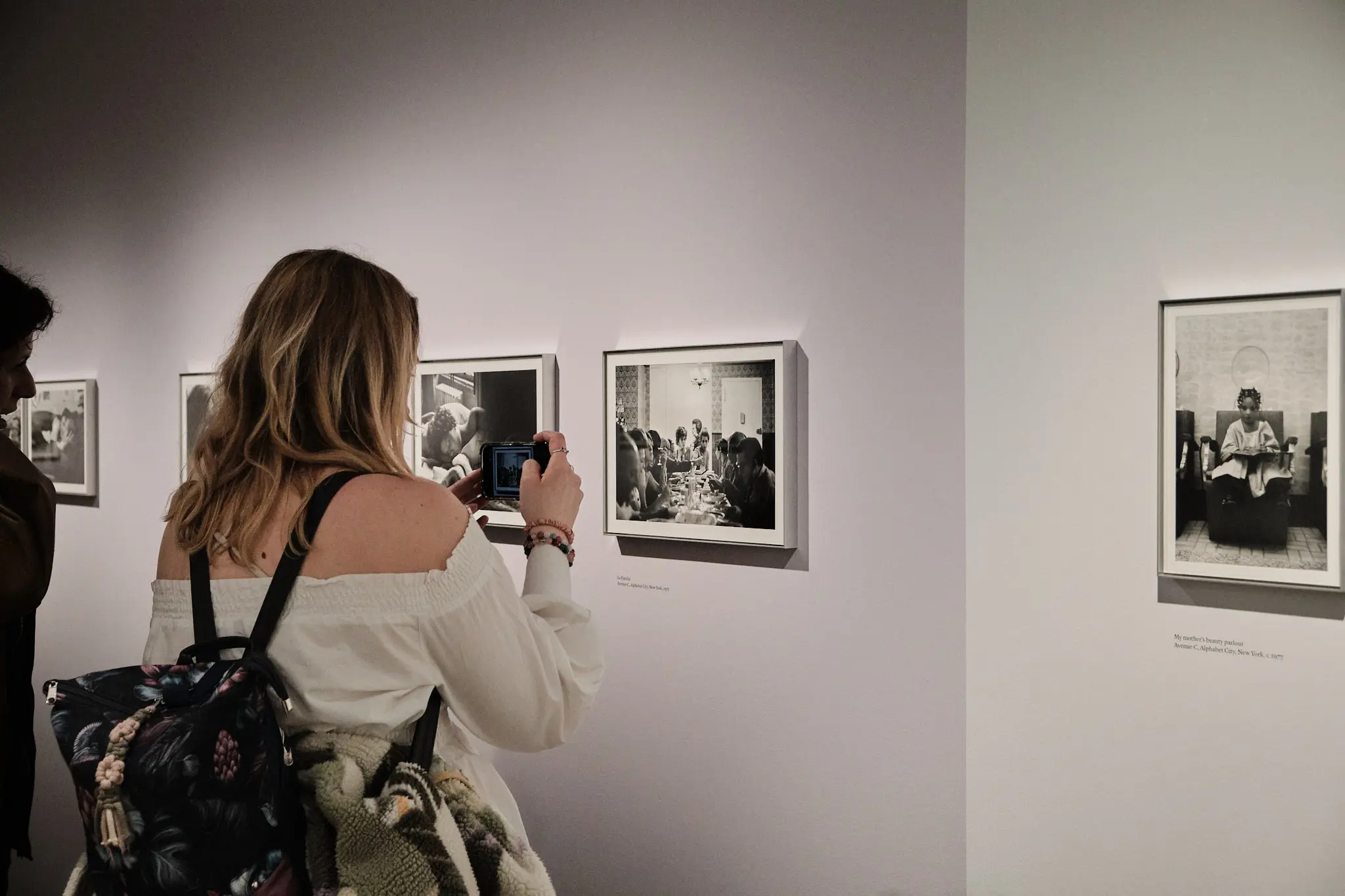
Giannecchini writes, “our lives take on meaning through becoming linked to the lives of others”. This sentiment serves as a point of convergence between her writing and Gottschalk’s photography. Both practices insist on relation. Both resist isolation. Together, they construct a space in which past and present meet, where images and words hold each other in place.
We Others goes beyond presenting an archive. It activates it. It asks us to look, to remember and to continue.
___
Excerpts of Hélène Giannecchini's writing have been used in this text on the occasion of her new Fitzcarraldo Edition release, An Army of Lovers Cannot Fail.
Visit our shop to explore more and purchase your own copy.


