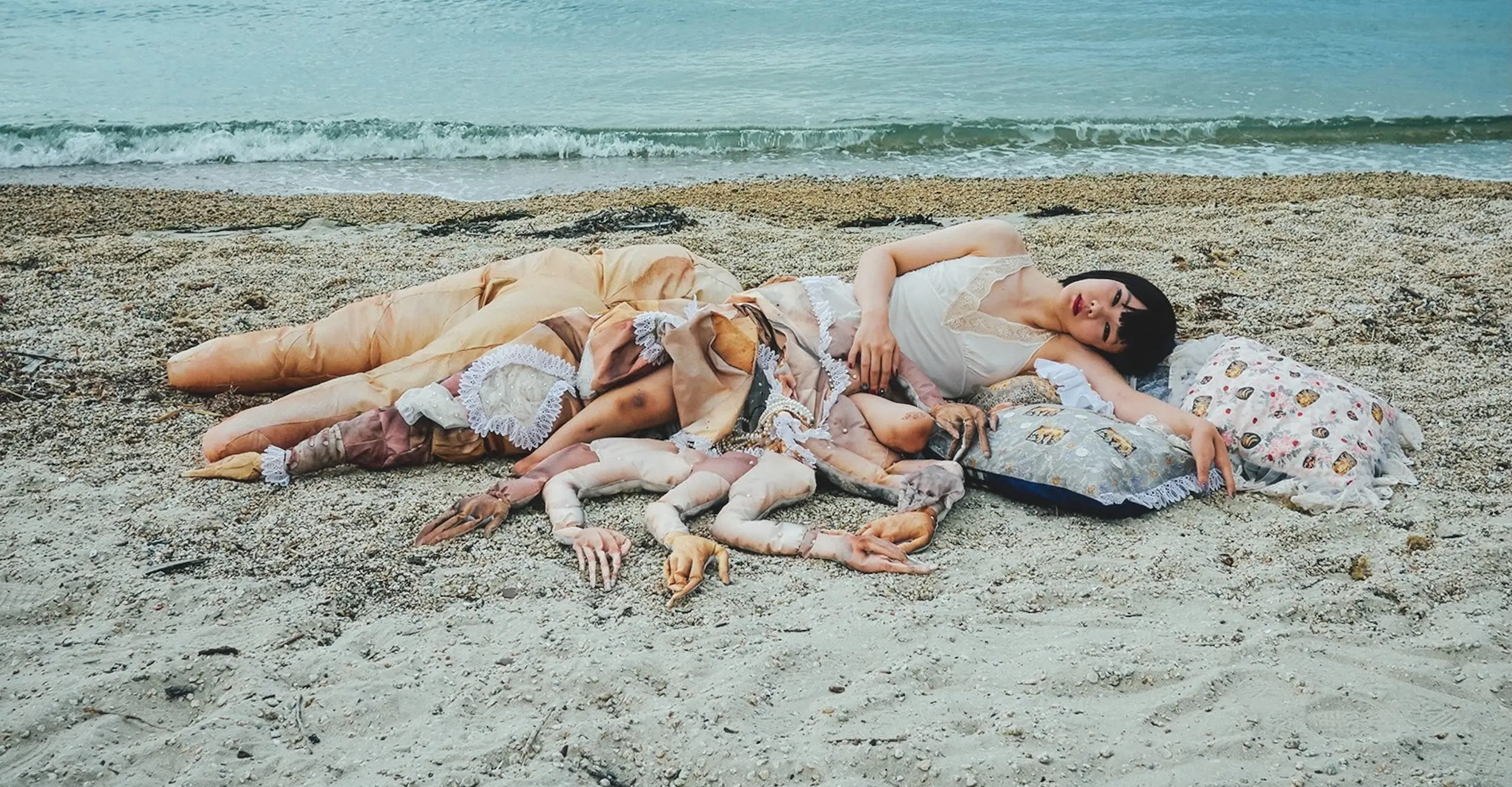
Bringing together two distinct and influential contemporary practices, this conversation features artists Mari Katayama and Yuki Tawada. Together they will explore themes of identity, embodiment, transformation and self-representation, each giving insight into the possibilities of image-making today.
The discussion will be moderated by curator and art historian Lena Fritsch, offering an introduction to the exhibition through the perspectives of artists shaping its present and future.
Interpretation provided by Kozue Etsuzen.
Details on how to access this event will be confirmed upon registration. Please check your junk folders if you haven't received an email from TPG staff confirming your place.
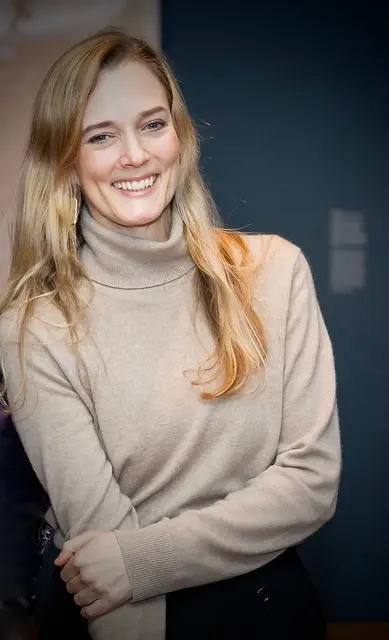

Dr Lena Fritsch is an award-winning curator and writer, dividing her time between London, UK and Berlin, Germany. A specialist in Japanese photography and an experienced translator, Fritsch has published monographs on the work of Ishiuchi Miyako (2026) and Morimura Yasumasa (2008), and the first English-language overview on post-war Japanese photography, Ravens & Red Lipstick: Japanese Photography since 1945 (Thames & Hudson, 2018/2024). Her extensive curatorial career has seen her work at the Ashmolean Museum, Oxford; Tate Modern, London; and Hamburger Bahnhof – Nationalgalerie, Berlin. She has orchestrated over 15 exhibitions, including Tokyo: Art & Photography at the Ashmolean Museum, Oxford (2021), which garnered numerous 5-star reviews. In 2022, she co-curated the Roppongi Crossing Triennial of contemporary Japanese art at the Mori Art Museum, Tokyo. Fritsch has taught at the University of Oxford and University of London, and lectures regularly at museums. She holds a PhD in Art History from Bonn University, Germany and also studied at Keio University, Tokyo.
Katayama Mari (born in Saitama, Japan, 1987) graduated with a master’s degree from the Department of Intermedia Art at Tokyo University of the Arts in 2012. Katayama was born with tibial hemimelia, a condition that caused bones in her lower legs and left hand to be underdeveloped. At the age of nine, she chose to have her lower legs amputated. This practical decision would become the core of her art; her photographic and sculptural installations serve as reflective and empowering ways to question normative ideas of the body. Her process involves creating hand-sewn or handmade objects, including embellished prostheses, and placing herself within a carefully constructed scene. These self-portraits give life to her own sense of self while asking viewers to question the nature of representation. Her photographic work is predominantly exhibited as prints—some large-scale, nearly life-size, and some presented in ornate frames resplendent with seashells and rhinestones. Through her installations, Katayama projects her own world, surrounded by embroidered and stuffed objects of her creation.
Tawada Yuki (born in Hamamatsu, Japan, 1978) uses photography as well as sculpture and video in her work. She attended Tōhoku University, where she majored in biochemistry. As part of her university and graduate studies, she studied at the University of California, Santa Barbara, where she fell in love with photography. After completing her studies in Japan, she attended Camberwell College of Arts at the University of the Arts London, where she became interested in the physicality of photography and the possibility of working with the surface of a photograph. Tawada engages with the themes of spirituality and healing, using innovative methods such as scraping and burning the surfaces of her photographs or creating sculptural installations with lace-like cutouts of photographs. Through mesmerising immersive installations, she translates the deep spirituality of her work into physical experiences for viewers. Tawada currently teaches photography and video at Kyoto University of the Arts.
Ticketing
By booking for this event you agree to our Terms & Conditions.


