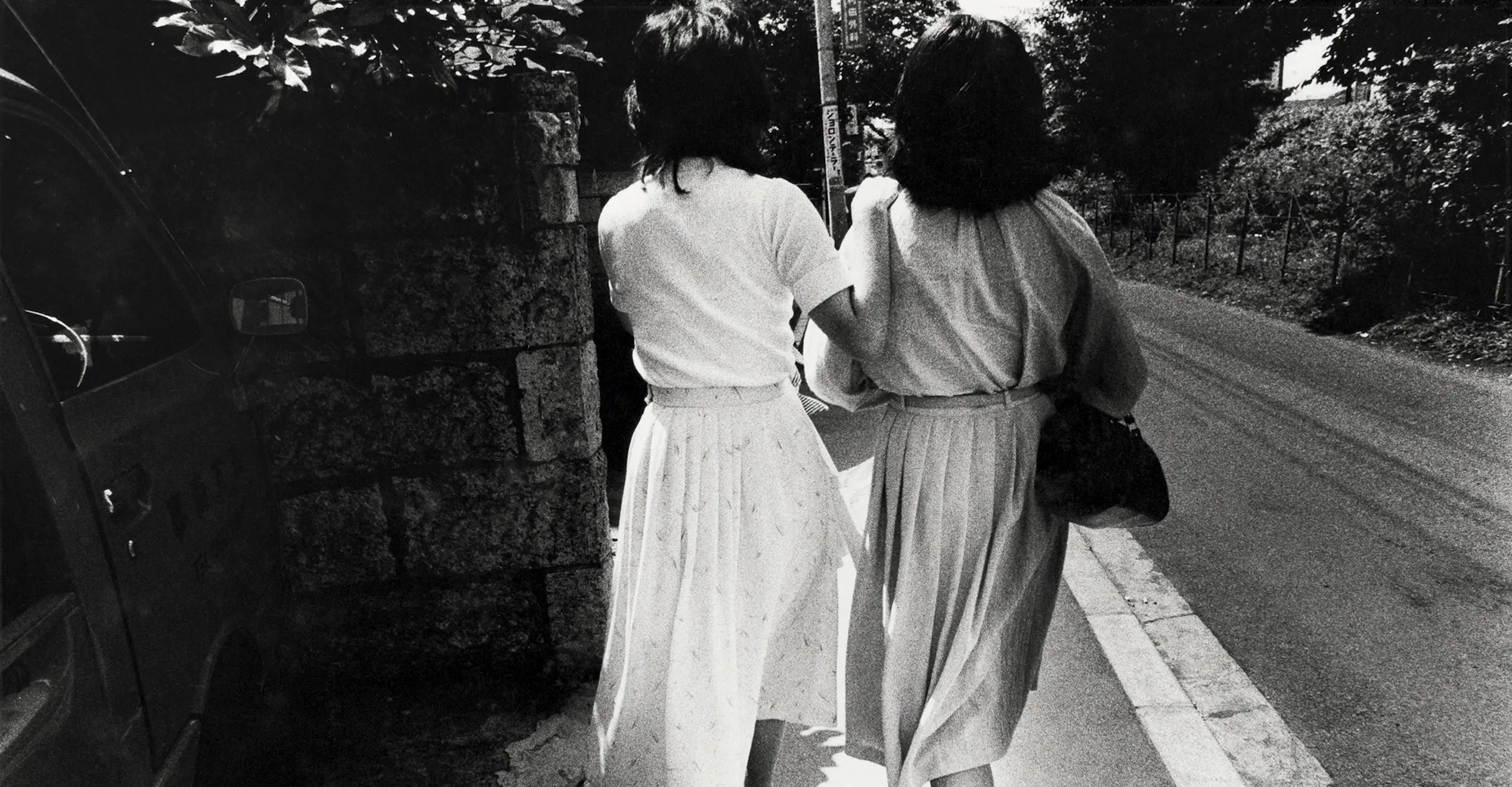
Wednesday evenings, 6:30 - 8pm
Women have played a pivotal role in shaping Japanese photography, contributing to the medium through diverse and innovative approaches. Yet the field has traditionally been male dominated, with renowned photographers, publishers, gallerists, critics and camera enthusiasts predominantly being men. This course aims to critically reassess this traditional perspective by highlighting the achievements of some of the photographers featured in Japanese Women Photographers: From 1950s to Now.
Starting with an overview of Japanese photography since 1945, the lectures focus on one or two artists per session. We explore each artist's work in depth, and contextualise their practice in relation to photography history and theory, and the Japan's wider societal and political histories. Ample time is provided in every session for questions and discussions.
This course is led by curator and art historian Dr Lena Fritsch.
By booking for this event you agree to our Terms & Conditions.
Format
Each session takes place weekly online using Zoom. Sessions include a blend of lectures, close analysis and group discussion. Any presentations and/or resources will be made available online where possible and accessible via Shared Folders.
Who is this for?
This course is open to anyone with an interest in photography, visual culture, and Japanese art and society. It is particularly suited to those who want to broaden their perspectives on photography's history. Our courses are intended for anyone who is 18 or over. If you are under 18 years old and want to attend a course (either in-person or online) you must be accompanied by a parent or guardian for all of each session.
While the course centres on Japanese women photographers, it speaks to wider questions around gender, labour, identity and representation, making it relevant to a range of interests and backgrounds. No prior knowledge is required — participants are encouraged to engage at their own pace, with space for discussion, questions and shared reflection throughout.
---
This course is programmed in connection to the exhibition I'm So Happy You Are Here: Japanese Women Photographers 1950s to now, curated by Lesley A. Martin, Takeuchi Mariko and Pauline Vermare. The exhibition was organised by Aperture in collaboration with the Rencontres d’Arles with support from Kering | Women In Motion, Ishibashi Foundation, Anne Levy Charitable Trust,1970 Japan World's Exposition Memorial Fund and The Great Britain Sasakawa Foundation. Additional curatorial collaboration for the exhibition in London, with Taous Dahmani, The Photographers’ Gallery.

Schedule (all times BST)
Session 1 | Introduction: Japanese Photography since 1945 on Wed 16 Sep at 18.30-20.00
The first session provides a brief overview of Japanese photography since 1945, focussing on influential trends, movements, and groups such as VIVO and Provoke.
Session 2 | ISHIUCHI Miyako: Traces on Wed 23 Sep at 18.30-20.00
ISHIUCHI Miyako (b.1947) stands as Japan’s most prominent female photographer, celebrated for her impressive career that includes representing Japan at the Venice Biennale in 2005, receiving the Kimura Ihei Photography Award in 1979 and the esteemed Hasselblad Award in 2014, and showcasing her art in solo exhibitions at renowned museums worldwide. This lecture delves into her body of work, offering an in-depth examination of select series spanning from the 1970s to the present.
Session 3 | ISHIKAWA Mao: Women in Okinawa on Wed 30 Sep at 18.30-20.00
ISHIKAWA Mao (b.1953), renowned for her deeply personal portrayal of life in Okinawa, shines a light on the US military presence and marginalised communities. As both a photographer and activist, she immerses herself fully within the lives of the people she captures. This session looks at the impactful work and its socio-political context.
Session 4 | NISHIMURA Tamiko: Journeys on Wed 7 Oct at 18.30-20.00
Active as a photographer since the late 1960s, NISHIMURA Tamiko (b.1948) has captured scenes of everyday life in post-war Japan, as well as moments from her travels. Her lyrical and dynamic body of work remains underappreciated both within Japan and internationally, deserving greater recognition. This session focusses on her skilful work.
Session 5 | YANAGI Miwa | SAWADA Tomoko: Staging Identity on Wed 14 Oct at 18.30-20.00
YANAGI Miwa (b.1967) is a contemporary artist best known for highly stylised, digitally manipulated photographic series that often focus on women. SAWADA Tomoko (b.1977) has created conceptual self-portraits that explore female identity, gender roles and social conformity. This session focusses on their staged photographs of the late 1990s and early 2000s.
Session 6 | NINAGAWA Mika, Hiromix, NAGASHIMA Yurie: Beyond Girls Photography on Wed 21 Oct at 18.30-20.30
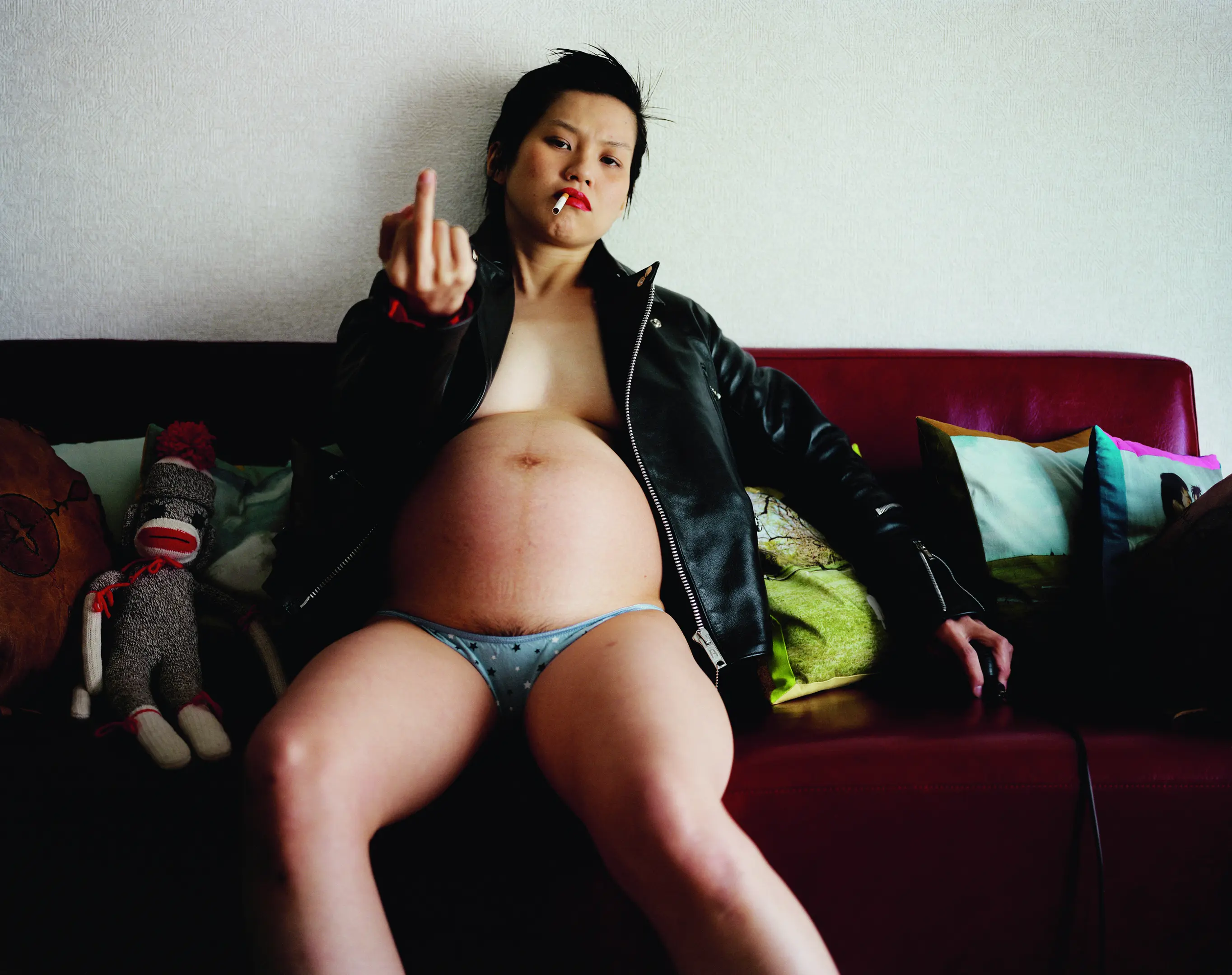
Emerging from a period where women were mostly associated with being photographic subjects rather than artists, the late 1990s movement of "girls photography“ drew attention to young women who claimed ownership of their bodies and narratives. This session introduces the diverse works and careers of the three artists who shared the 2001 Kimura Ihei Photography Award — Japan’s most prestigious photography award, which had previously almost exclusively been given to men.
Bursaries
A number of partial bursaries covering 50 per cent of course fees will be awarded on a first come basis. Applicants who wish to be considered for a partial bursary should submit a statement (max. 500 words) to projects@tpg.org.uk, outlining how Japanese Photography Reconsidered would contribute to their professional development. Successful applicants will be notified within a week of submission.
We actively encourage applications from groups who are currently underrepresented in the cultural sector in the UK. This includes people who identify as D/deaf, disabled* and neurodivergent; those with caring responsibilities; candidates from Black, Asian and ethnically diverse backgrounds; and arts and culture professionals whose career development has been negatively impacted by Covid-19, prioritising independent artists, freelancers and those made redundant/at risk of redundancy since 2020.
*The Equality Act 2010 defines a disabled person as someone who has a physical or mental impairment, and the impairment has a substantial and long-term adverse effect on their ability to carry out normal day-to-day activities. Sharing that you are disabled will not be used in any way in judging the quality of your application.
More about Dr Lena Fritsch
Dr Lena Fritsch is an independent curator and writer, dividing her time between London and Berlin. A specialist in Japanese photography and an experienced translator, Fritsch has published monographs on the work of Ishiuchi Miyako (coming out next week! with Thames&Hudson, Aperture and Atelier EXB) and Morimura Yasumasa (2008), and the first English-language overview on post-war Japanese photography, Ravens & Red Lipstick: Japanese Photography since 1945 (Thames & Hudson, 2018/2024). Her extensive curatorial career has seen her work at the Ashmolean Museum, Oxford as their first Curator of Modern & Contemporary Art; Tate Modern, London; and Hamburger Bahnhof – Nationalgalerie, Berlin before she became independent in 2026. She has orchestrated over 15 exhibitions, including Tokyo: Art & Photography at the Ashmolean Museum (2021), which garnered numerous 5-star reviews, and Ashmolean NOW: Pio Abad, which was shortlisted for the 2024 Turner Prize. In 2022, she co-curated the Roppongi Crossing Triennial of contemporary Japanese art at the Mori Art Museum, Tokyo. Fritsch has taught at the University of Oxford and University of London, and lectures regularly at museums. She holds a PhD in Art History from Bonn University, Germany and also studied at Keio University, Tokyo.


