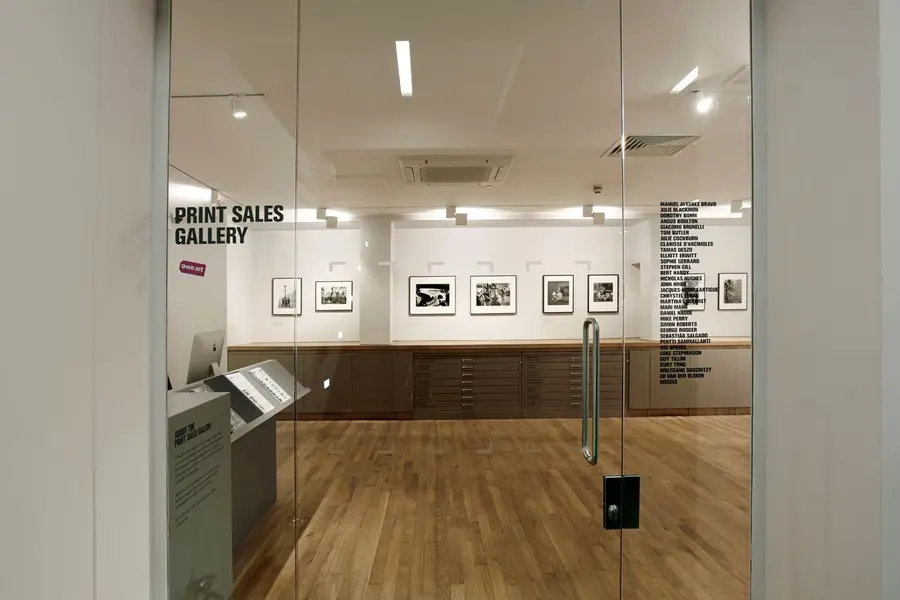
Trees are among the oldest keepers of memory on earth. Rooted in one place for decades, sometimes centuries, they quietly outlast the generations that build homes among them, absorbing and carrying the histories of these cultures and landscapes.
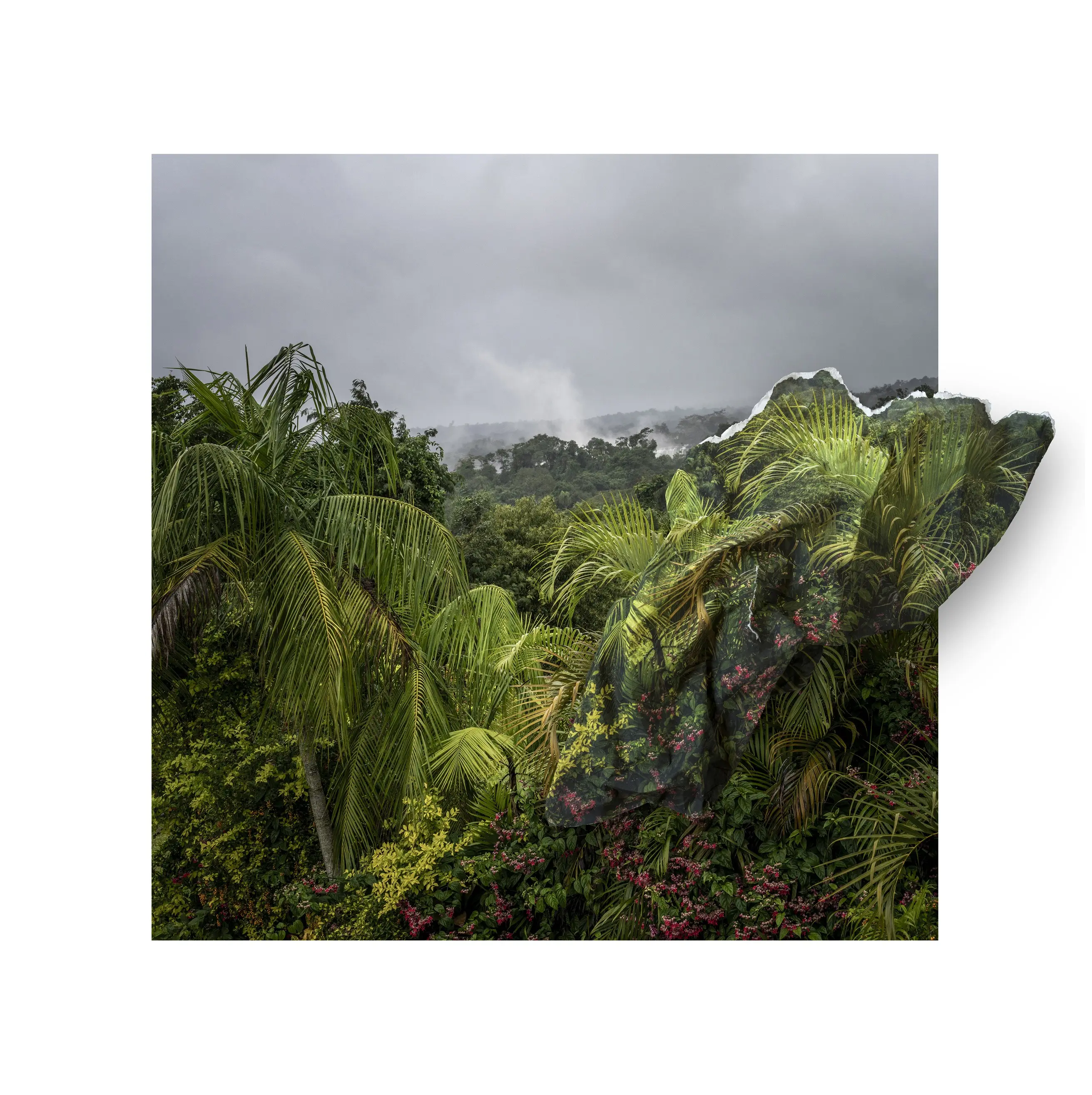
Ingrid Weyland, Topographies of Fragility LI, 2021
Bringing together photography and mixed media, Roots considers trees as living embodiments of origin, memory and belonging. In these works, trees become symbols of cultural heritage, markers of home, and archives of collective memory.
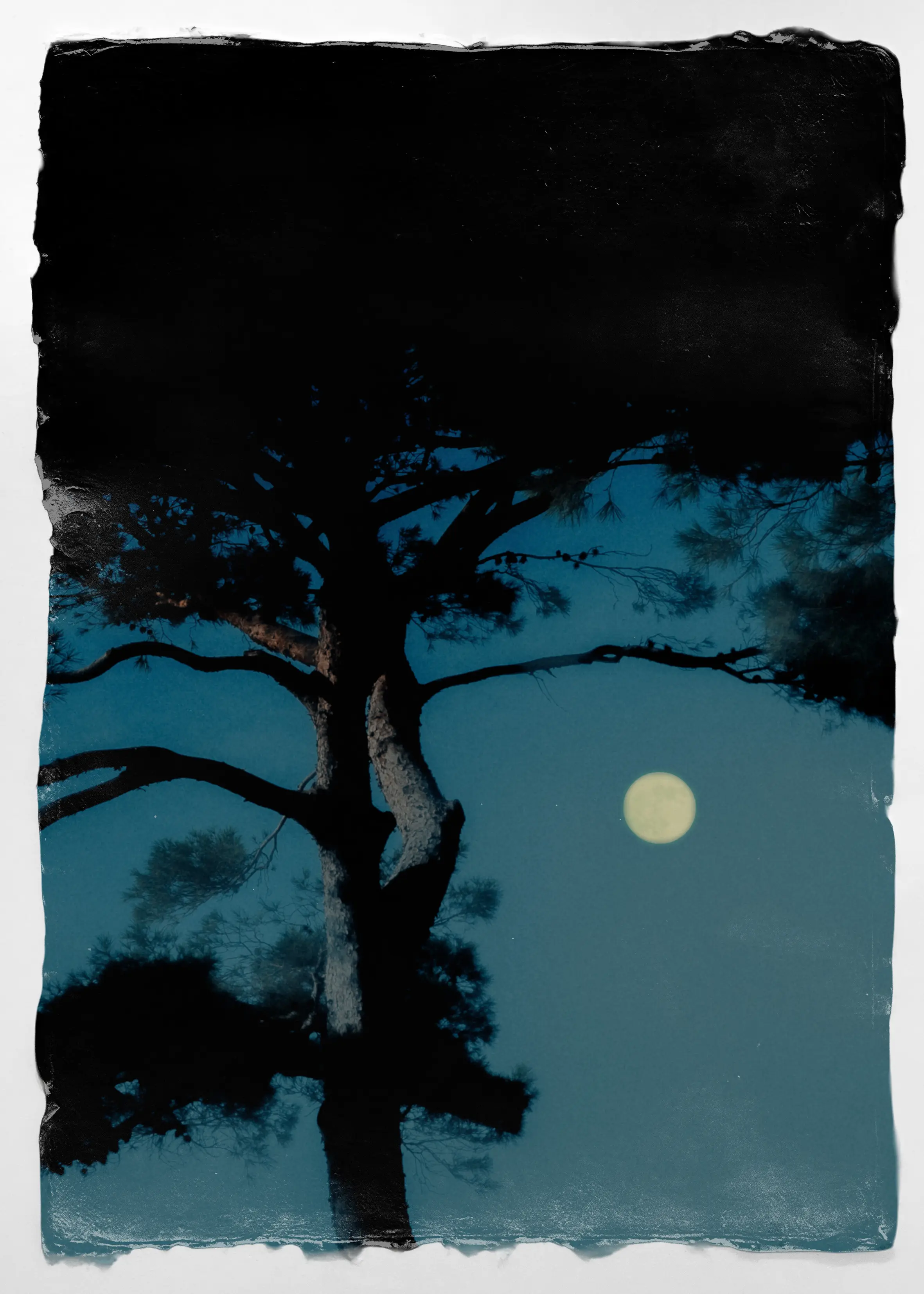
Like our own roots, trees form intricate networks beneath the surface that anchor, sustain and connect. Together, these works invite us to consider the enduring, reciprocal relationships between people and place. In doing so, they urge us to act as guardians for the forests that sustain us whilst honouring the histories, memories and cultures that continue to shape our lives.
Prices from £665 + VAT. All profits from Print Sales support The Photographers’ Gallery’s public programme.
Featured artists
Julie Cockburn (b.1966, UK)
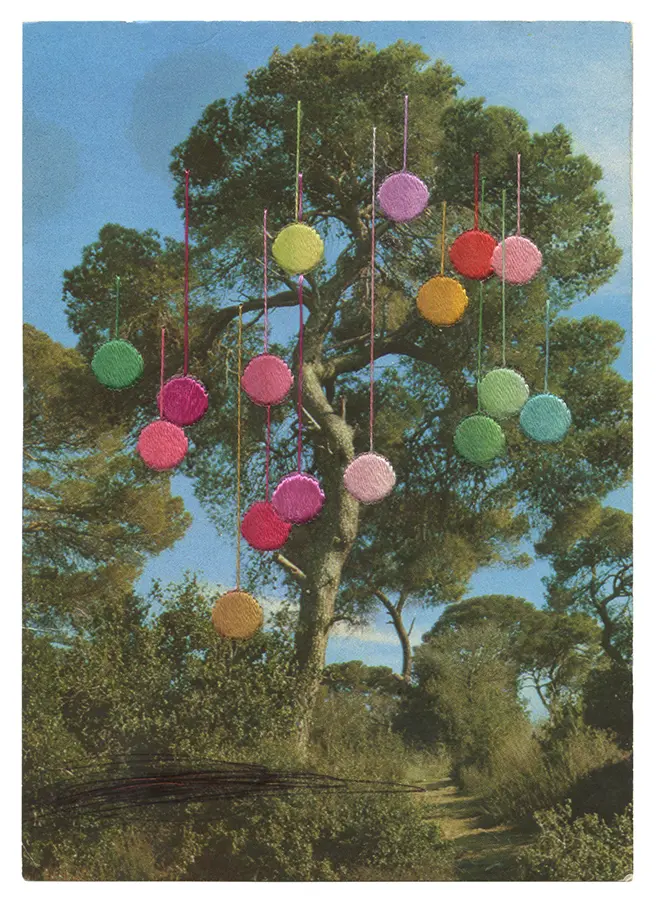
Julie Cockburn is renowned for her creative re-imagining of found objects and vintage photographs, embellishing and reconfiguring the originals through carefully applied embroidery, montage or ceramics. Her inventive reconfigurations result in meticulously crafted contemporary artworks - each a unique piece. Her aim is not to 'improve' the original photos - many of which have already been tinted and in Cockburn's view therefore already altered by a subjective process - but rather to add another chapter to its story and continue its journey. These works were made especially for this exhibition.
Paul Cupido (b.1972. The Netherlands)
Paul Cupido’s photographic practice centres on the search for beauty in the ephemerality of life. His affinity for the natural world was shaped by a childhood spent on the island of Terschelling, in the Netherlands, and continues to inform his exploration of impermanence and fleetingness through the changing seasons, the ebb and flow of tides, and the cycles of the moon. Cupido returned to Terschelling earlier this year to photograph the trees that have long been part of his connection to the island; these 2026 works were made especially for this exhibition.
Gohar Dashti (b. 1980, Iran)
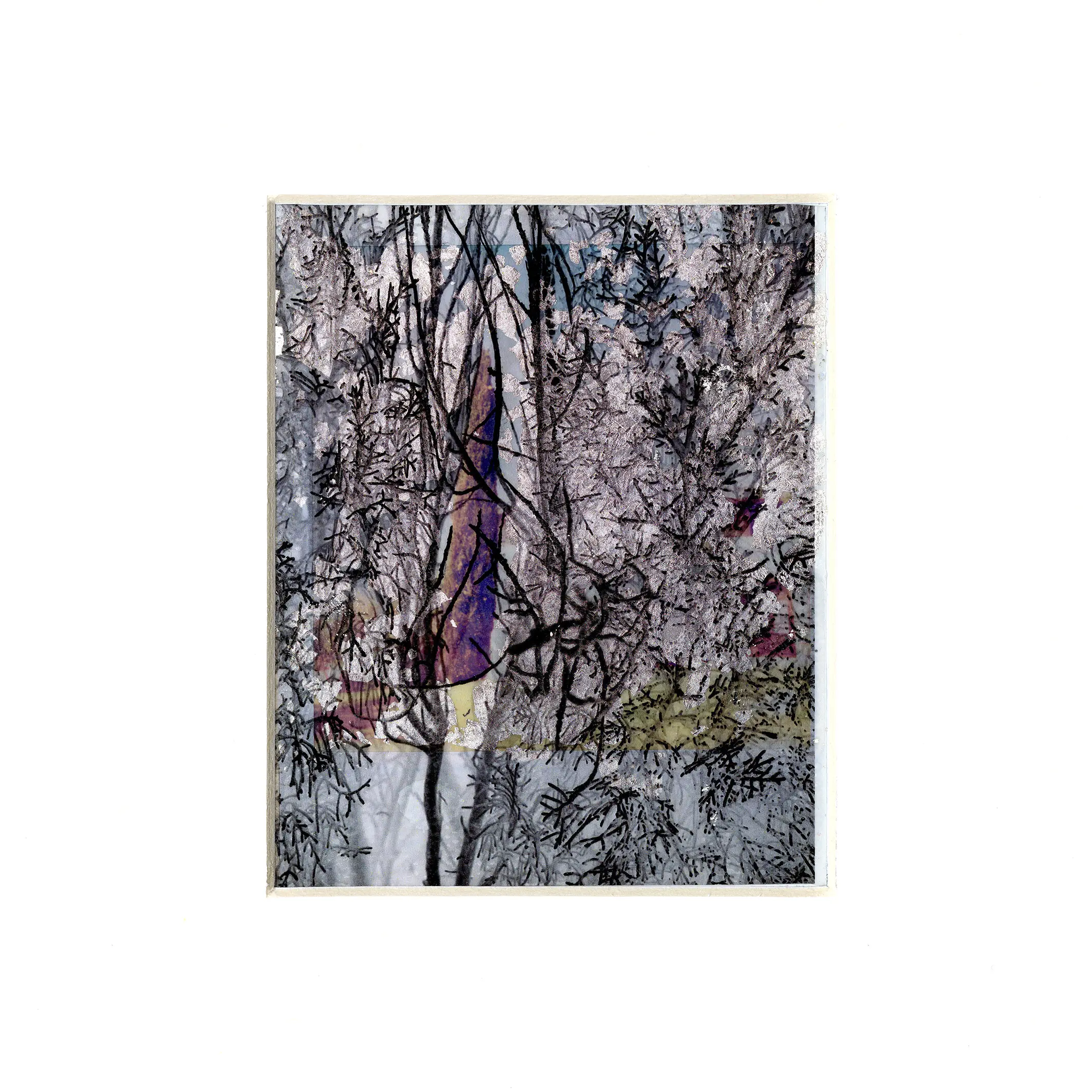
Gohar Dashti’s work references history and contemporary culture, as well as the convergence of anthropological and sociological perspectives. We will be showing works from her recent series, Cypress. In this mixed media series, Dashti depicts the enduring power of the cypress tree using delicate silver and gold leaf, combined with Polaroids and transparent photographs. Drawing on the cypress’s significance in Persian culture and literature, including Ferdowsi’s Shahnameh, Dashti explores its symbolism of resilience, freedom, and eternity. The cypress stands as a witness to resilience and heritage - a symbol of the stories, values, and traditions that shape Dashti’s practice.
Chrystel Lebas (b. 1966, France)
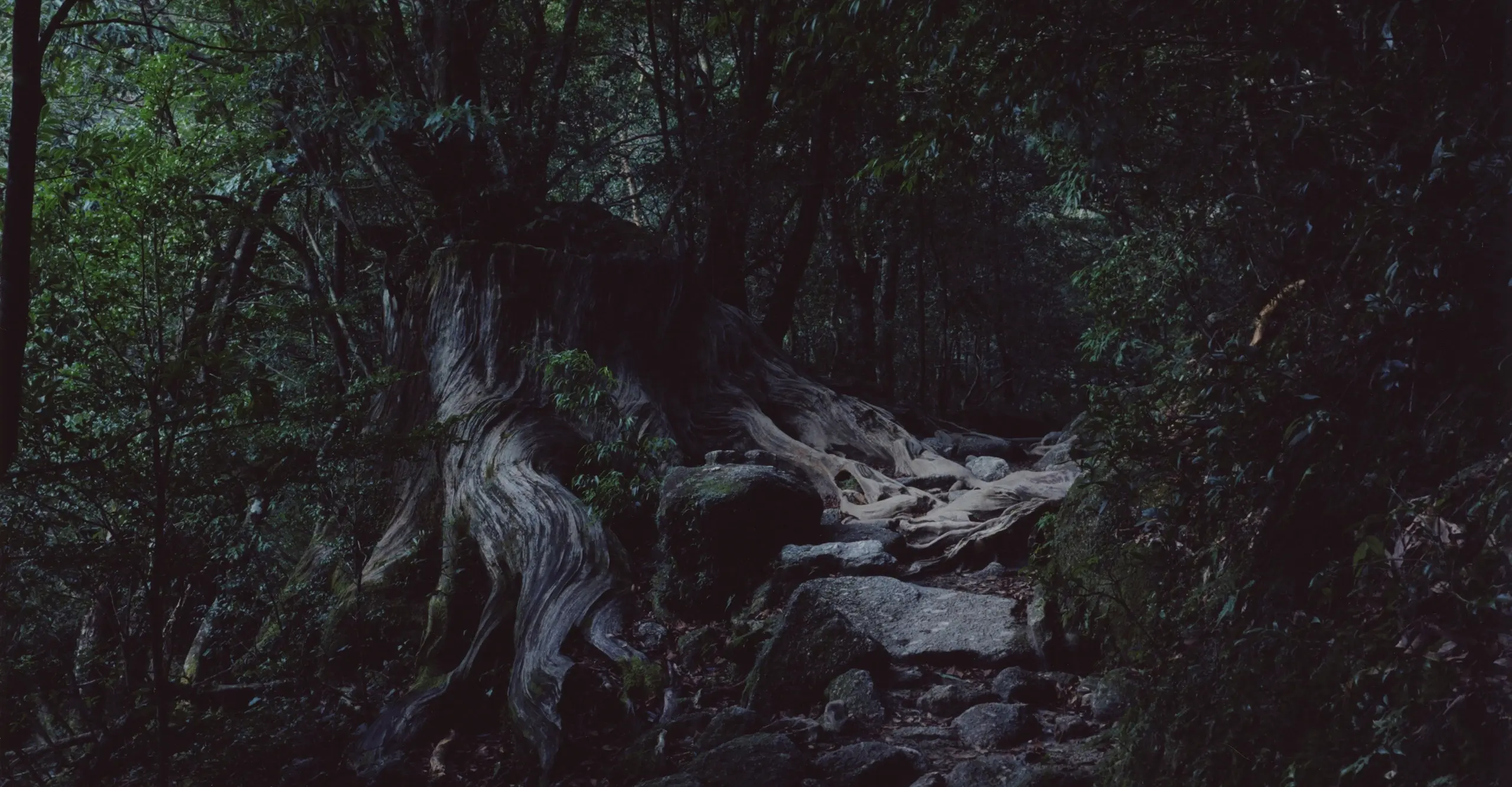
London-based photographer Chrystel Lebas often uses a panoramic camera with long exposure times ranging from two to six hours to create sweeping, mesmerising landscapes that explore photography’s relationship with time and movement. Lebas investigates the ways in which landscapes carry psychological significance and reveal concealed histories. For her recent series, ‘Regarding Forests’, she journeyed to the Olympic National Park’s Hoh Rain Forest in Washington State, USA, in search of the elusive ‘one square inch of silence’ - a place free of human-made noise. She also travelled to the southern Japanese island of Yakushima, known for its dense forest of Japanese cedar trees called ‘Yakusugi’. These immersive panoramic images of forests and wildernesses consider notions of the sublime and our relationship to nature and were exhibited at the Wellcome Collection for the first time in 2021. The works highlight the complexity of these places, showing a landscape controlled by humans while simultaneously observing natural phenomena occurring at a specific time and place.
Miho Kajioka (b. 1973, Japan)
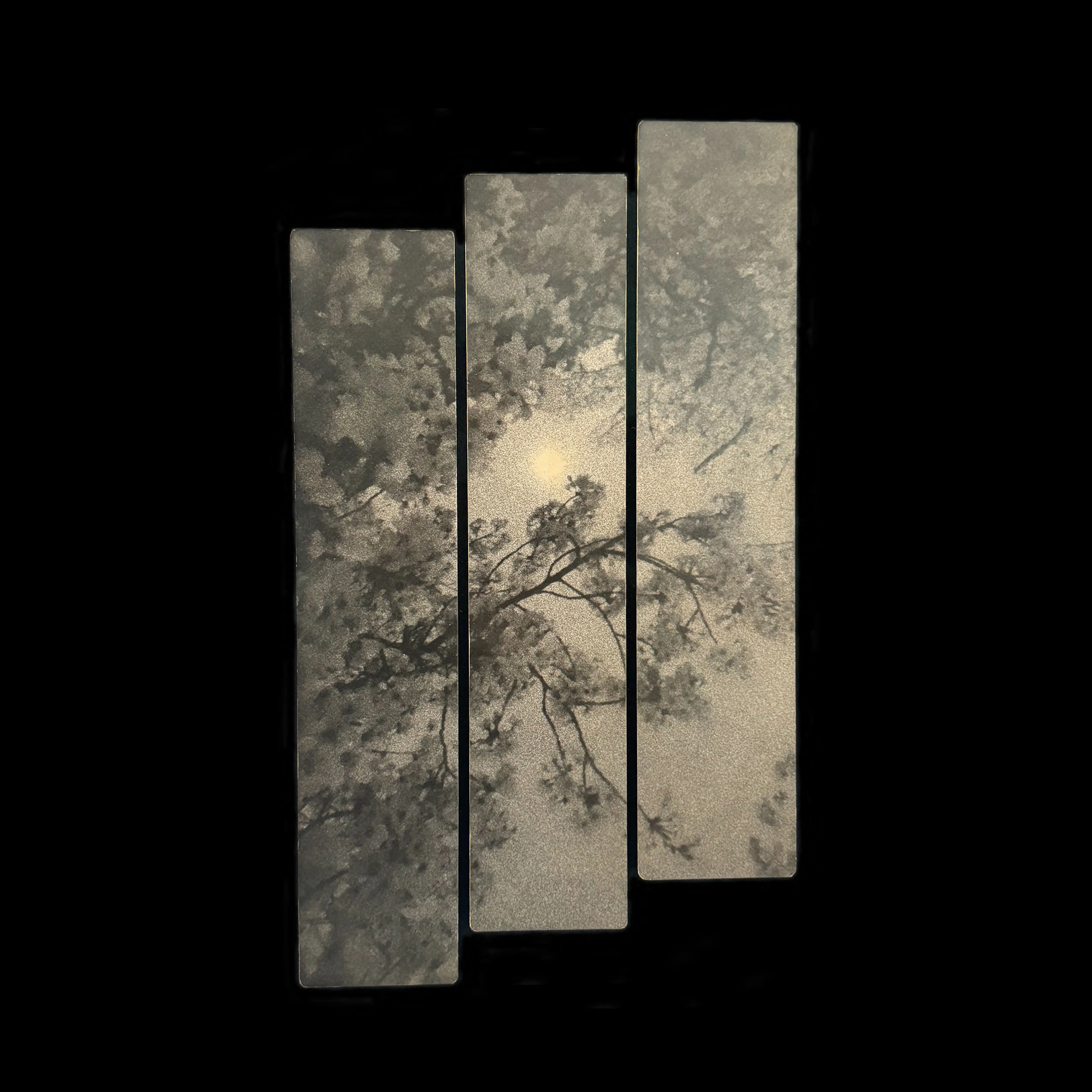
Fine art photographer Miho Kajioka creates ethereal, minimalist work that draws on the Japanese tradition of wabi-sabi - the appreciation of beauty in imperfection and transience - as well as Zen and Taoist ideas around the relationship between objects and the empty space surrounding them. We will be showing works featuring cherry blossom trees, a powerful symbol in Japanese culture of the fleeting nature of life. For Kajioka, the blossoms also carry a sense of hope and renewal, recalling how, following the Great East Japan Earthquake, people looked towards the arrival of spring and the blooming of the cherry trees as a sign that things might become better.
Michael Kenna (b. 1953, UK)
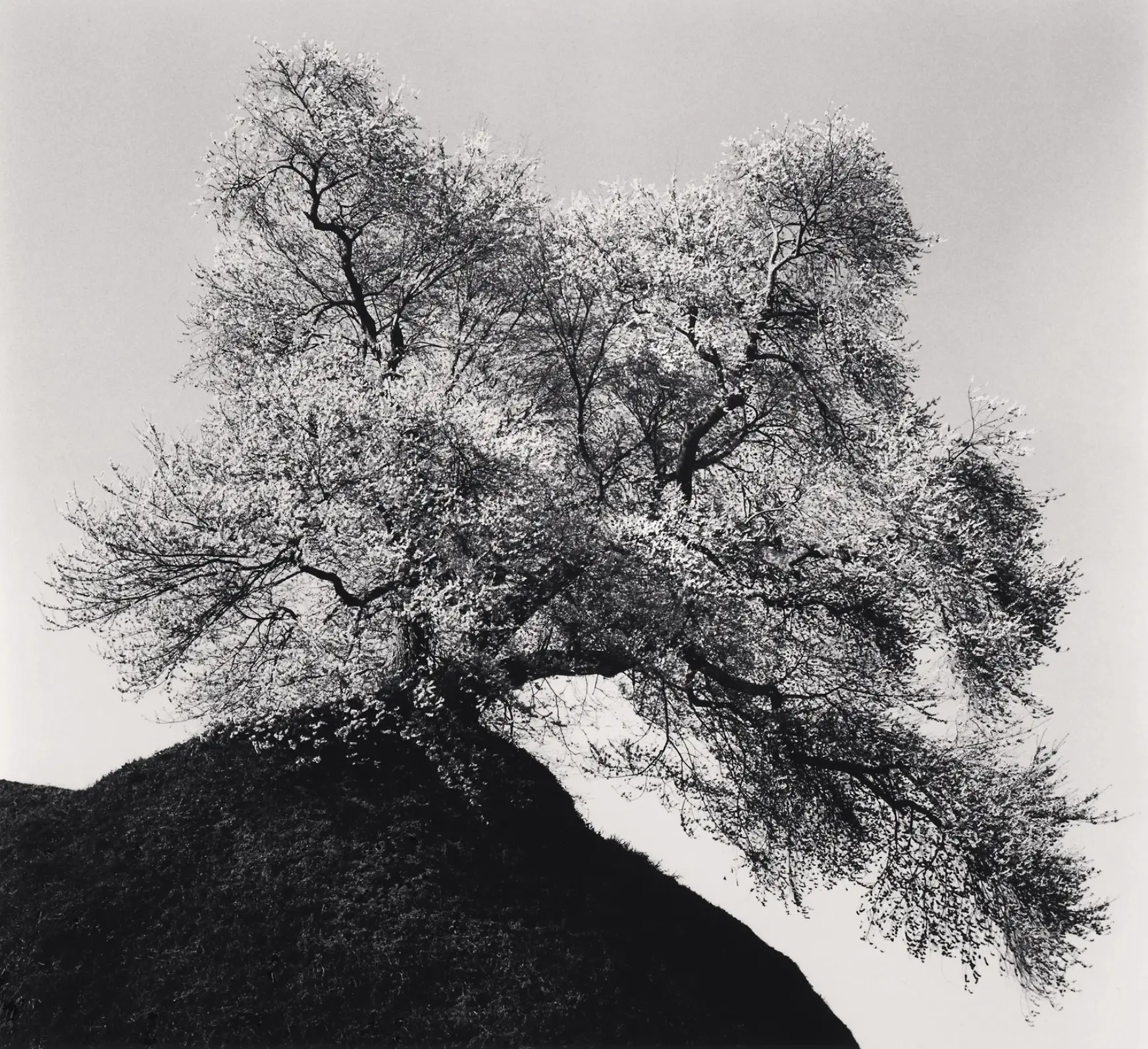
Trees are a central, lifelong subject in the 50-year career of acclaimed landscape photographer Michael Kenna. Rather than treating them merely as part of the scenery, Kenna views trees as “silent friends” - unique personalities and active collaborators in his artistic process. His mysterious photographs, often made at dawn or in the dark hours of night, concentrate primarily on the interaction between natural and human-made landscapes.
We are showing works from Kenna’s brand new series, photographed in Fukushima earlier this year. Japan has been a defining influence throughout Kenna’s career. Since his first visit in 1987, he has cultivated a deep relationship with the country, describing his work there as a ‘lifelong love story’. In this new body of work, Kenna offers a broader view of Fukushima, a region rich in history and culture that he believes should not be defined by a single catastrophic event. He draws on kintsugi - the traditional Japanese art of repairing broken ceramics with gold-dusted lacquer - as a metaphor for Fukushima’s renewal, suggesting that wounds and hardships can, through the process of healing, become a source of strength and value.
Ingrid Weyland (b. 1969, Argentina)
Ingrid Weyland’s work combines her background in graphic design with a longstanding interest in architecture, sculpture and the manipulation of form. Her Topographies of Fragility series transforms landscape photography into sculptural objects: after making the flat pigment prints, Weyland manually twists, folds and crumples the paper, challenging the traditional two-dimensional photographic image. The act of manipulating the print becomes a metaphor for human intervention in the natural world, while the paper itself - made from the pulp of a tree - creates a connection between the material and the landscapes depicted.
Weyland is drawn to pristine landscapes seemingly untouched by human presence, describing these places as spaces for connection, contemplation, and introspection. The work we will be showing depicts Iguazú Falls, a vast landscape shared by Argentina and Brazil. While Weyland photographed the falls from the Argentine side, the landscape itself transcends national borders, offering a reflection on our connection to place and the fragile yet resilient relationship between humans and the natural world.
Pentti Sammallahti (b. 1950, Finland)
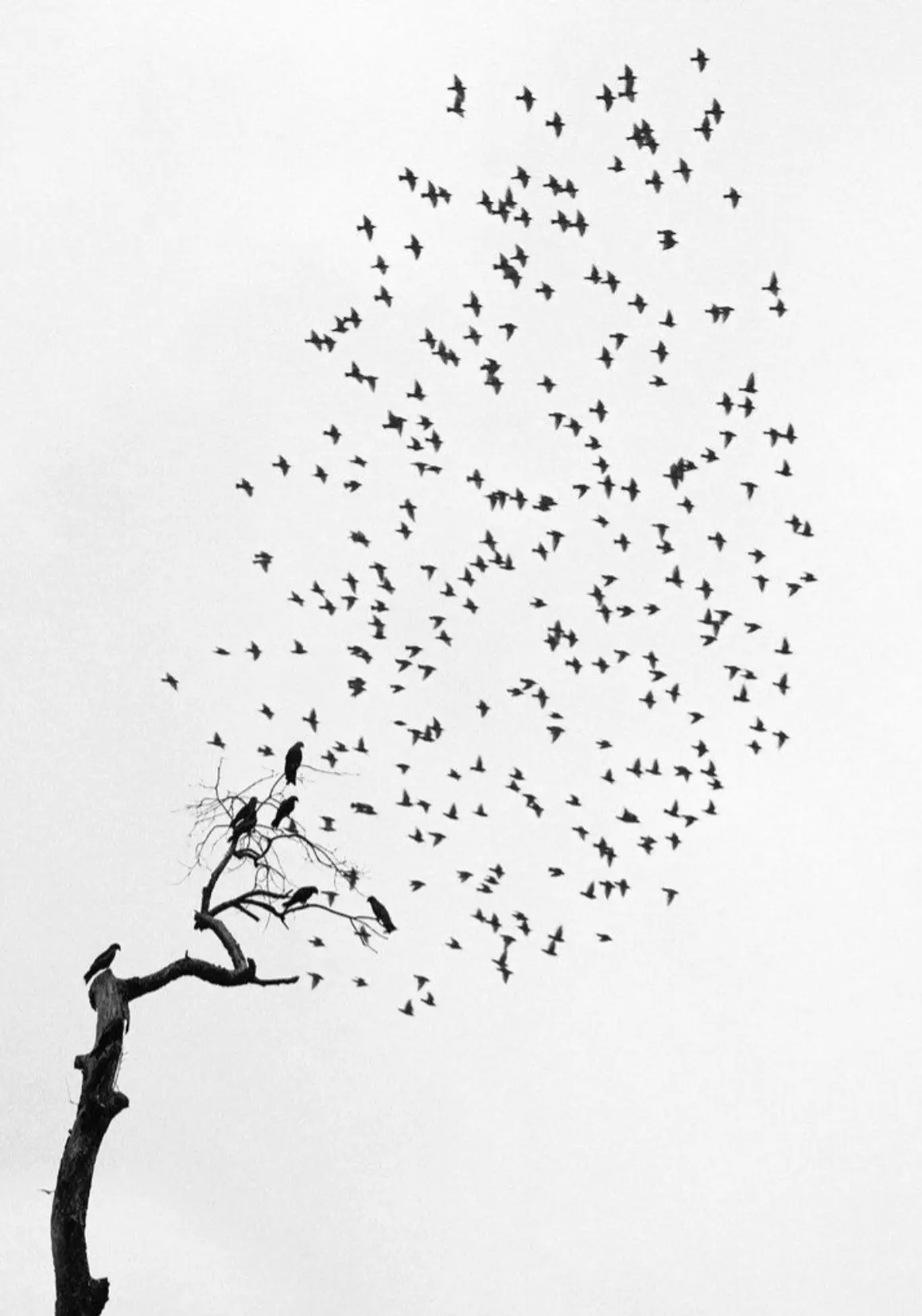
Pentti Sammallahti’s work is celebrated for its whimsical humour and profound, gentle warmth. His photographs often take the form of visual fables, finding moments of unexpected humour and tenderness in the everyday lives of animals and people. Trees play an important role in these scenes, providing shelter, perches and nesting places for the birds and animals that inhabit his landscapes. Rather than considering trees primarily through their symbolic meaning for humans, Sammallahti draws our attention to the lives they sustain and the communities that gather around them.
Sammallahti is renowned for his mastery of the darkroom, considering the printing process to be equally as important as shooting. He personally develops and prints his work, carefully shaping its tonal range and atmosphere. The resulting silver gelatin prints have a gem-like quality, with remarkable depth and luminosity.