How did you start working in photography?
As a student, I was extremely introverted and searched for something that could speak in place of my own words. Around that time, girly photography became a major trend in Japan in the late 1990s. I first discovered HIROMIX through an article in a weekly magazine my father was reading, and that was when I became aware of photography as a means of expression.
Soon after, I picked up a photobook by Nobuyoshi Araki, and it convinced me to pursue photography. I was fifteen years old.
The exhibition Japanese Women Photographers brings together work by 27 women photographers from the 1950s to today. Are there photographers in the exhibition who you connect with or who have influenced your work?
The artists participating in this exhibition are photographers I studied while learning the history of photography at university, so it would not be an exaggeration to say that I have been influenced by every one of them. Among them, however, HIROMIX, Yurie Nagashima, and Mika Ninagawa—who spearheaded Japan’s Girls’ Photo movement in the 1990s—have had the greatest impact on me.
This movement has been interpreted and discussed in many different ways, but what mattered most to me was that its influence reached even a junior high school student like myself. For many girls of my generation, it was a deeply significant cultural moment.
These women gave me the courage to pick up a camera. They also laid the foundation for my feminist perspective, and I would not be the person—or the artist—I am today without them.
What other photographers, beyond this exhibition, do you feel an affinity with?
I admire Nobuyoshi Araki’s uncompromising approach to photography and the fearless originality of his work. I can’t think of another photographer who compares to him. Beyond photography, I feel a strong affinity with the musician Jun Togawa and the manga artist Yumiko Oshima.
Your photography is very personal and you've described your process as deeply psychological - what does it mean to you to share such intimate moments of your life with family and friends with gallery visitors?
I take photographs solely for myself. I have never been concerned with what viewers might feel when they look at my work, nor do I believe that is something I need to consider. I believe that works born unintentionally from an artist’s deeply personal desires can resonate more profoundly with people than works created to convey a specific message or advocate a particular point of view.
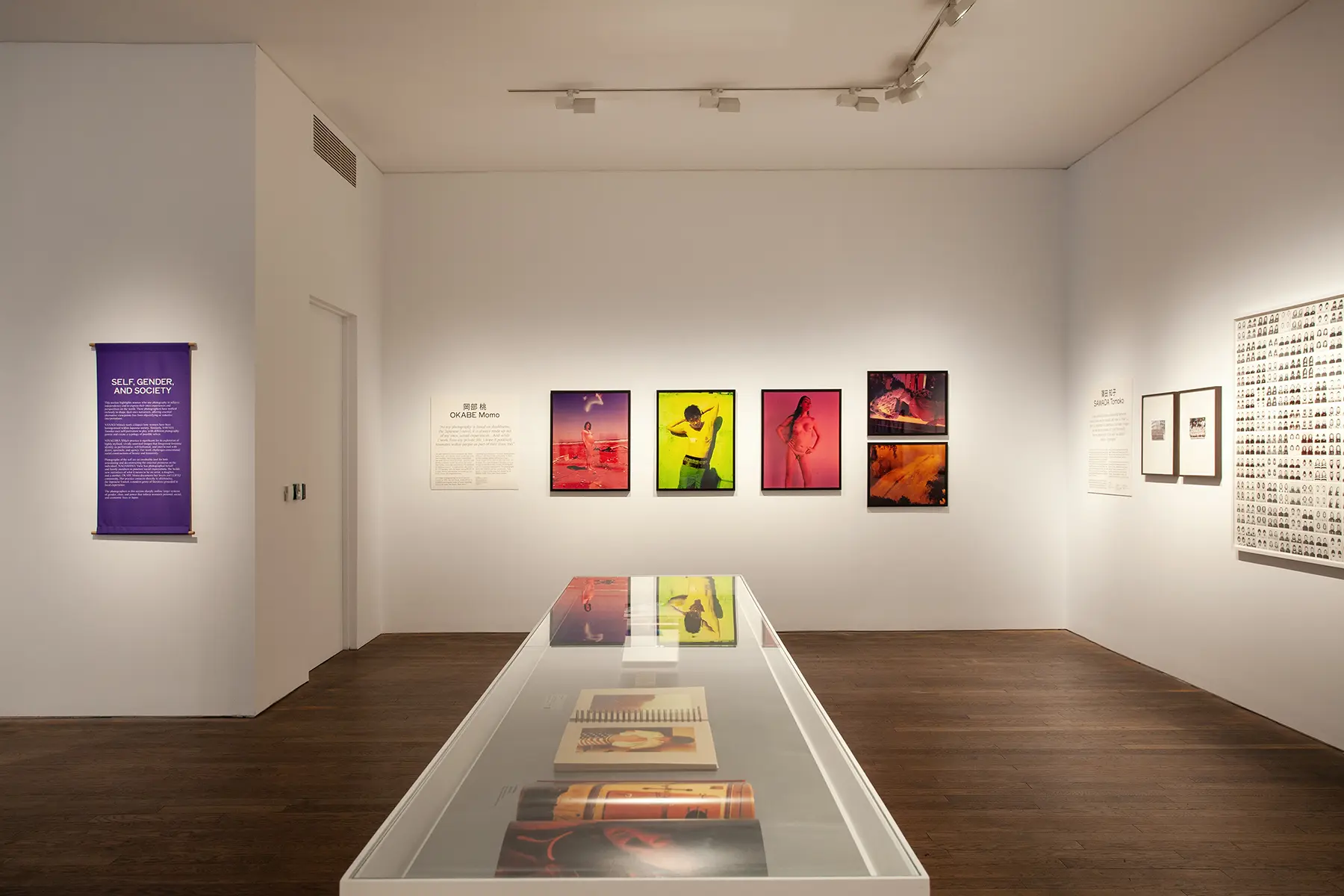
The photographs in the exhibition from the series Ilmatar and Dildo are drenched in colour. Could you tell us about your use of colour in your work?
I learned the techniques of colour photography in the darkroom during my university years, where I was taught to pursue accurate and faithful colour reproduction. However, the colours I created were always far removed from what was considered “correct,” and I was often told that they were wrong. Yet, to me, they were the right colours, and I could not change them.
There is a world that exists only within me, and I am simply trying to reproduce that world through photography. I did not want it to be easily altered or touched by others. Even today, I continue to use colour in my work as a way of pursuing my own personal truth.
Could you tell us about any differences between sharing your work in photobooks and in an exhibition?
Holding a book in my hands and turning its pages is a deeply intimate act of entering the world I have created through editing. On the other hand, encountering the work in an exhibition space is an experience of standing face to face with the people and landscapes captured within the photographs.
By physically placing themselves in the space, viewers are given the opportunity to spend time confronting both the subjects in the photographs and their own responses to them. This is why I hope people will come to the exhibition in person and discover how they feel when they are truly present with the work.
You have said your work comes from shishōsetsu - the Japanese I-novel. How does this type of writing inspire your work?
The shishōsetsu (I-novel) is a genre unique to Japanese literature, in which writers draw upon their own experiences and emotions to create fiction.
I have always been more deeply moved by the quiet lives of ordinary people than by extraordinary or dramatic events. I believe that the journey of human existence—the moment we are born, the days we spend living, and the inevitable arrival of death—is one of the most precious and beautiful things in this world. Through my photography, I hope to capture and express this profound beauty.
Although the shishōsetsu begins with the “self,” it does not remain closed within the boundaries of the individual. Instead, it reaches outward, connecting with universal themes such as gender, history, and mortality. Through this literary form, I have been inspired by a way of expression that begins from the personal, yet opens itself to society and to others.
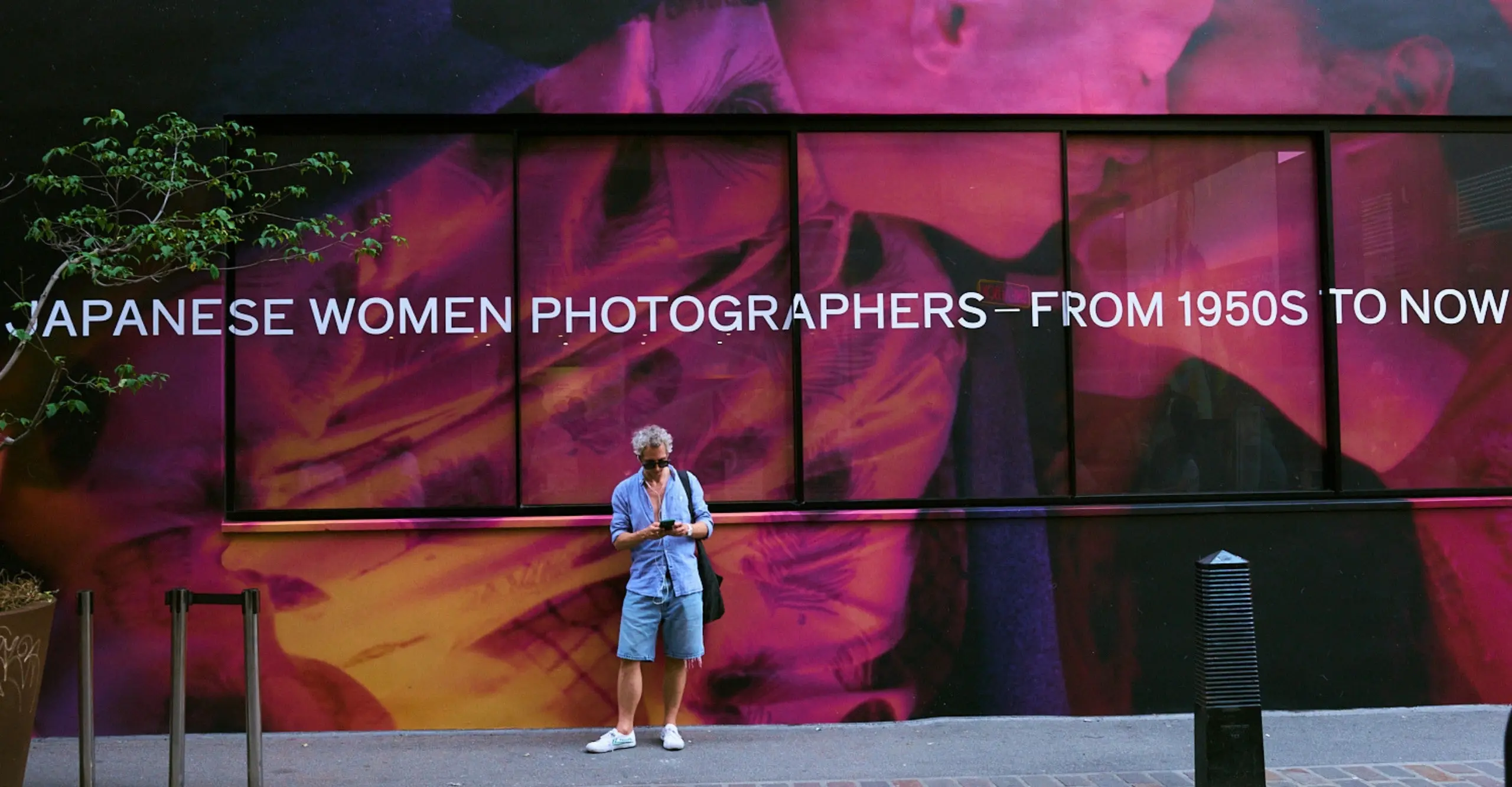
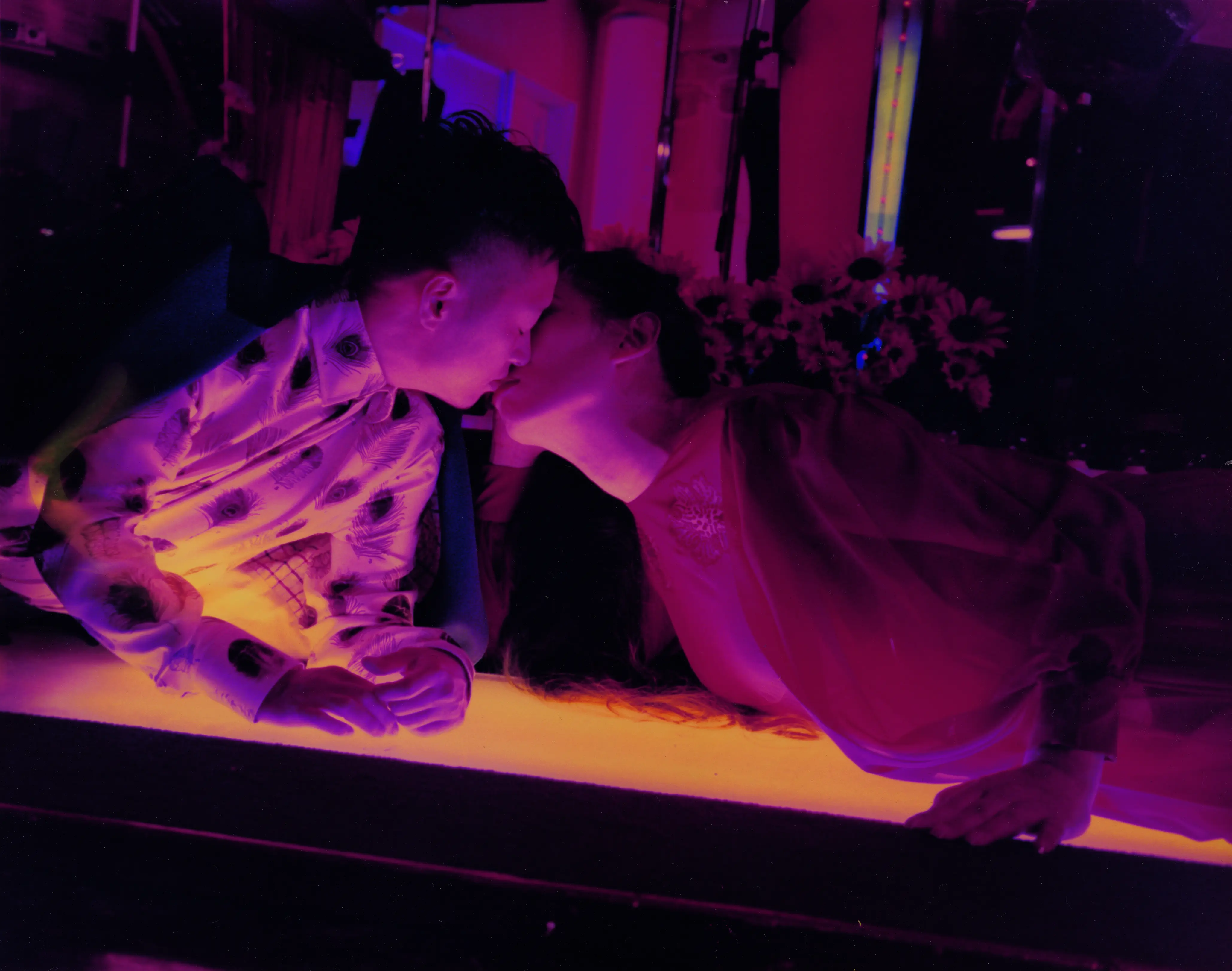
One of your photographs from the series Ilmatar is on the front of The Photographers' Gallery building. What does it mean to you to have your work shown at such large scale on the streets of London?
The couple in this photograph are an FTM and MTF couple. To see this image presented in a public space, receiving the light and recognition it deserves, feels like a significant and hopeful gesture toward the future.

Your images are emotionally intense but never feel explanatory. How do you decide what to leave unresolved for the viewer?
In the contemporary world, things have become so complex that no one can claim to speak the absolute truth anymore. Nor do I believe that I have the right to condemn or judge anything.
Therefore, rather than offering answers, I choose to use photography as a way of expressing my own position—to say, “This is what I choose to believe."
For me, photography is my personal statement to the world in an age when certainty is no longer possible. At the same time, I believe that this statement has the potential to become a statement that each viewer can make their own.


