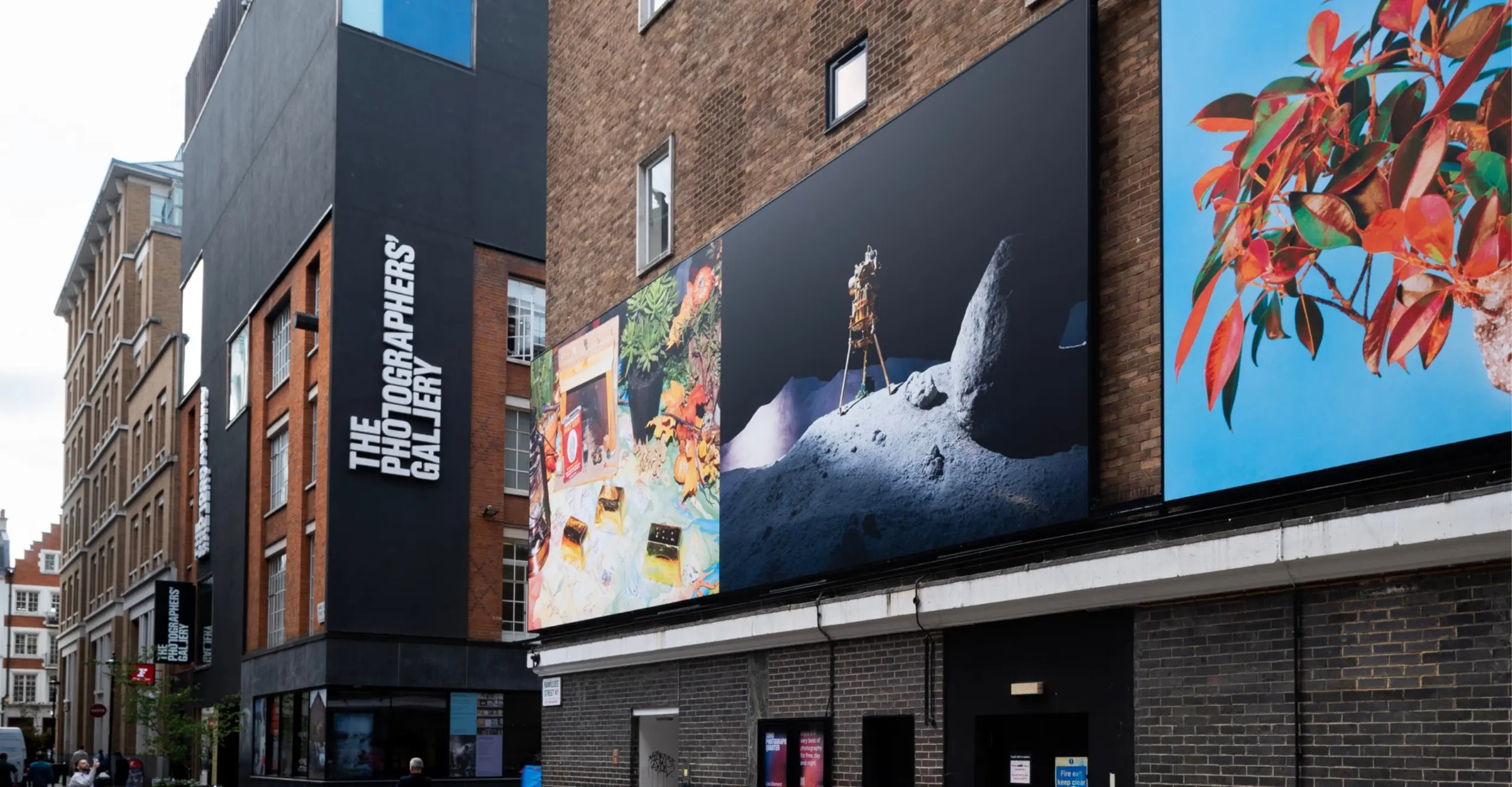
Taking place across eight sessions, this course explores what it means to present and sustain photographic practice within the photography sector today. We will engage with the key themes and debates that shape how photography is exhibited, interpreted and promoted, covering essential aspects of gallery management, from exhibition strategies and the impact of digital to education and marketing.
Each week a different member of staff from The Photographers’ Gallery will give us a behind-the-scenes look at their department as we think through the opportunities and challenges of engaging with diverse constituencies to promote photography.
Through presentations, group discussion and practical work, we will look at how TPG develops its dynamic programme to engage with broad audiences, contribute to how photography is understood and experienced today. We will explore TPG’s programme of talks and events, its education and mentoring initiatives, specialist bookshop, prints sales gallery, and communications team contribute to how photography is experienced.
Format
Taking place weekly at the Gallery, sessions include a blend of lectures, visits to the Gallery, group discussions and practical work. Each week will feature guest contributions from TPG staff, photographers and artists. Any presentations and/or resources will be made available online where possible and accessible via Shared Folders.
Who is this for?
Open to all who are interested in photography and for those who want to gain a first-hand understanding of how museums and galleries influence the production, circulation and interpretation of photography today. Produced in partnership with MA Museums, Galleries & Contemporary Culture at the University of Westminster
Schedule
Session 1 | Looking Back on Thu 29 Jan 2026
The course begins with an overview of the cultural and social conditions of the late 1960s to 1970s that led to the creation of The Photographers’ Gallery, the UK’s first public gallery dedicated to photography. How does this history continue to inform how we work with photography today? We will consider how the sector has evolved since then and also look at key exhibitions from that period.
Guest speaker: Clare Grafik (Head of Exhibition, TPG)
Session 2 | Photographic Institutions Now on Thu 5 Feb 2026
How are photographic institutions structured? In this session we will look at the organisational culture of The Photographers’ Gallery – how do teams work together to meet institutional aims and priorities. How is TPG different from other organisations? What opportunities and obstacles do we face as a sector?
Guest speaker: Sean O'Sullivan (Head of Commercial and Operations, TPG)
Session 3 | Public Engagement on Thu 12 Feb 2026
Learn how galleries develop educational initiatives to foster engagement by creating collaborative, thought-provoking activities and experiences. In this week’s session, members of the Gallery’s education team will discuss approaches and strategies for enhancing audience engagement with and appreciation of photography and visual culture, with particular focus on youth programmes and archives.
Guest speaker: Rawanne Koumaira (Curator, Youth Programmes) and Talitha Thomas-Kelly (Photographer, writer and TPG Trustee)
Session 4 | Attracting Audiences on Thu 19 Feb 2026 at University of Westminster
What is the audience journey before they arrive at the Gallery? How do galleries create an environment that ensures visitor enjoyment, security and well-being? In this session we look at the crucial moments of interaction between the public and the Gallery, from pre-visit marketing and communication to the on-site experience. We will explore how the considerations that go into each touchpoint enhance engagement, foster loyalty, and help build meaningful connections between the Gallery and our audiences.
Guest speaker: Sara Esteves (Marketing and Audience Development Manager, TPG)
Break on Thu 26 Feb 2026
Reading week break
Session 5 | New Technologies on Thu 5 Mar 2026 on Zoom
How has digital transformed photography and visual culture more broadly? This week we will look at how digital has uprooted the photographic image, the impact that it has had on organisations focused on the medium, and where our understanding is now that images are based on a set of techniques, codes and digital computation.
Guest speaker: Sam Mercer (Curator, Digital)
Session 6 | Exhibiting Photography on Thu 12 Mar 2026
This week we focus on the roles of commercial galleries and art fairs and how TPG’s Print Sales Gallery and curatorial teams collaborate. How do they support photographers and the development of artistic practice? What impact do they have in building public interest and engagement with art and photography? What is the relationship between the commercial activities and the public remit of TPG?
Guest speaker: Lucie Donaldson (Deputy Director, Print Sales Gallery at TPG) and Julia Bunnemann (Curator, TPG)
Session 7 | Finding Support on Thu 19 Mar 2026
With arts organisations everywhere struggling as they face budget cuts and rising costs of living, discussions about funding and fundraising remain particularly pertinent. This week we will look at how museums and galleries have had to adapt to changing cultural policies in a climate of continued economic uncertainty. There will be particular focus on long-term relationships with a range of stakeholders, including grant applications, corporate sponsorships and donor cultivation.
Guest speakers: Mary Ahern (Development Manager, TPG) and Sam Newman (Head of Development, TPG)
Session 8 | Preparing for Tomorrow on Thu 26 Mar 2026
In our final session we reflect on the preceding weeks’ discussions and debates as we look to the future. What challenges and opportunities lie ahead as we continue our mission to explore how photography connects, captivates and radically changes the world we live in?
Guest speaker: Shoair Mavlian (Director, TPG)
Biography
This course is led by author, educator and photo-historian Dr Sara Dominici.
Sara is a Reader (Associate Professor) in Photographic History and Visual Culture at the University of Westminster, where she is the Course Leader for the MA in Art and Visual Culture, and the Course Co-Leader for the MA Museums, Galleries, and Contemporary Culture (including with Professional Experience). Her research expertise includes popular photographic practice and the institutions and networks of photography. She is currently working on her second book on the early photographic darkrooms. Sara is co-Editor-in-Chief at Visual Culture in Britain.
Bursaries
A number of partial bursaries covering 50 per cent of course fees will be awarded on a first come basis. Applicants who wish to be considered for a partial bursary should submit a statement (max. 500 words) to projects@tpg.org.uk, outlining how the course Inside Out 2026 would contribute to their professional development. Successful applicants will be notified within a week of submission.
We actively encourage applications from groups who are currently underrepresented in the cultural sector in the UK. This includes people who identify as D/deaf, disabled* and neurodivergent; those with caring responsibilities; candidates from Black, Asian and ethnically diverse backgrounds; and arts and culture professionals desiring career development, prioritising independent artists, freelancers and those made redundant/at risk of redundancy since 2020.
*The Equality Act 2010 defines a disabled person as someone who has a physical or mental impairment, and the impairment has a substantial and long-term adverse effect on their ability to carry out normal day-to-day activities. Sharing that you are disabled will not be used in any way in judging the quality of your application.
Details on how to access this event will be confirmed upon registration. Please check your junk folders if you haven't received an email from TPG staff confirming your place.
Ticketing
By booking for this event you agree to our Terms & Conditions.


