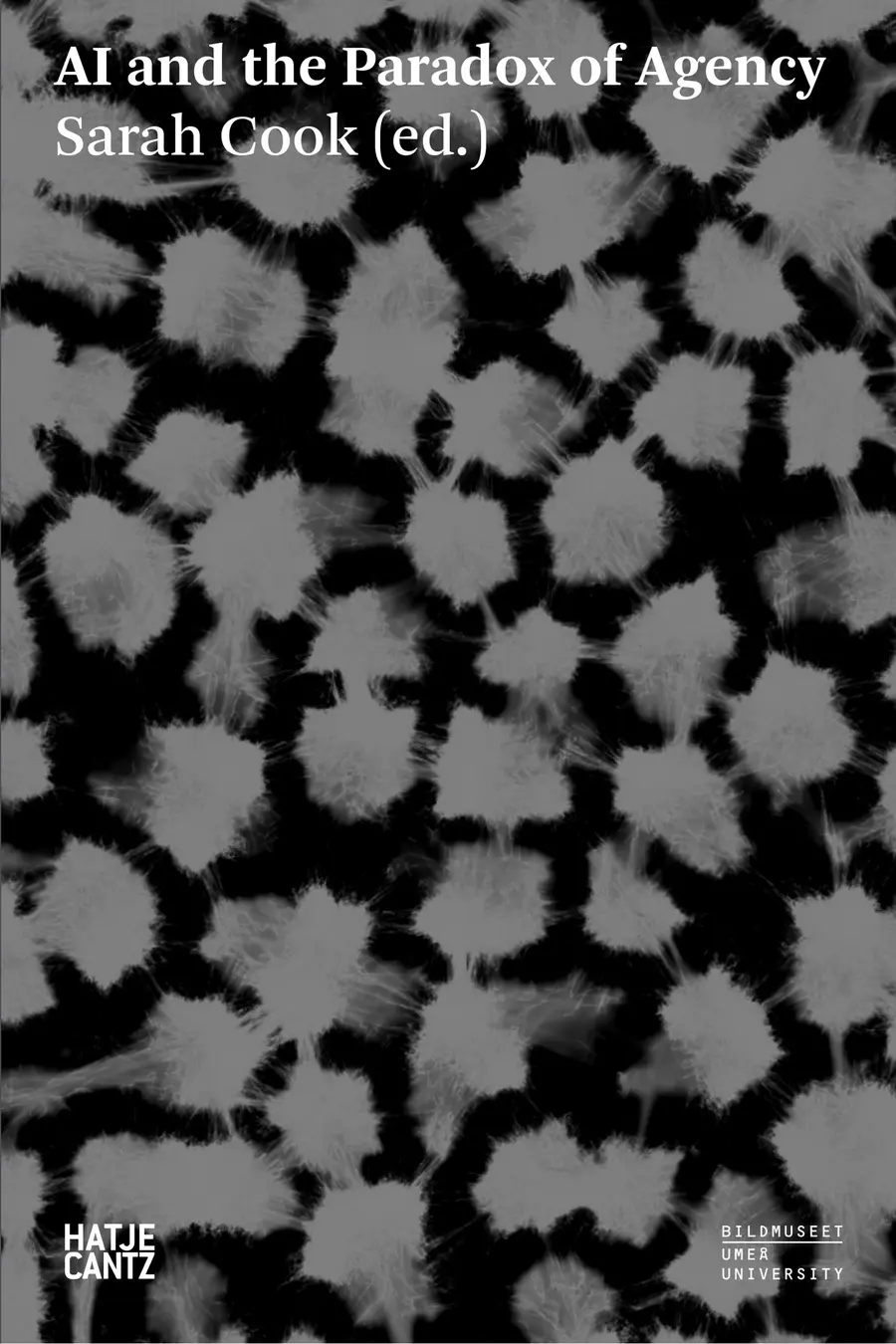
AI and the Paradox of Agency
The book AI and the Paradox of Agency accompanies an exhibition at Bildmuseet, in Umeå, Sweden until January 2027.
Pre-order the book as part of your event ticket:
Book tickets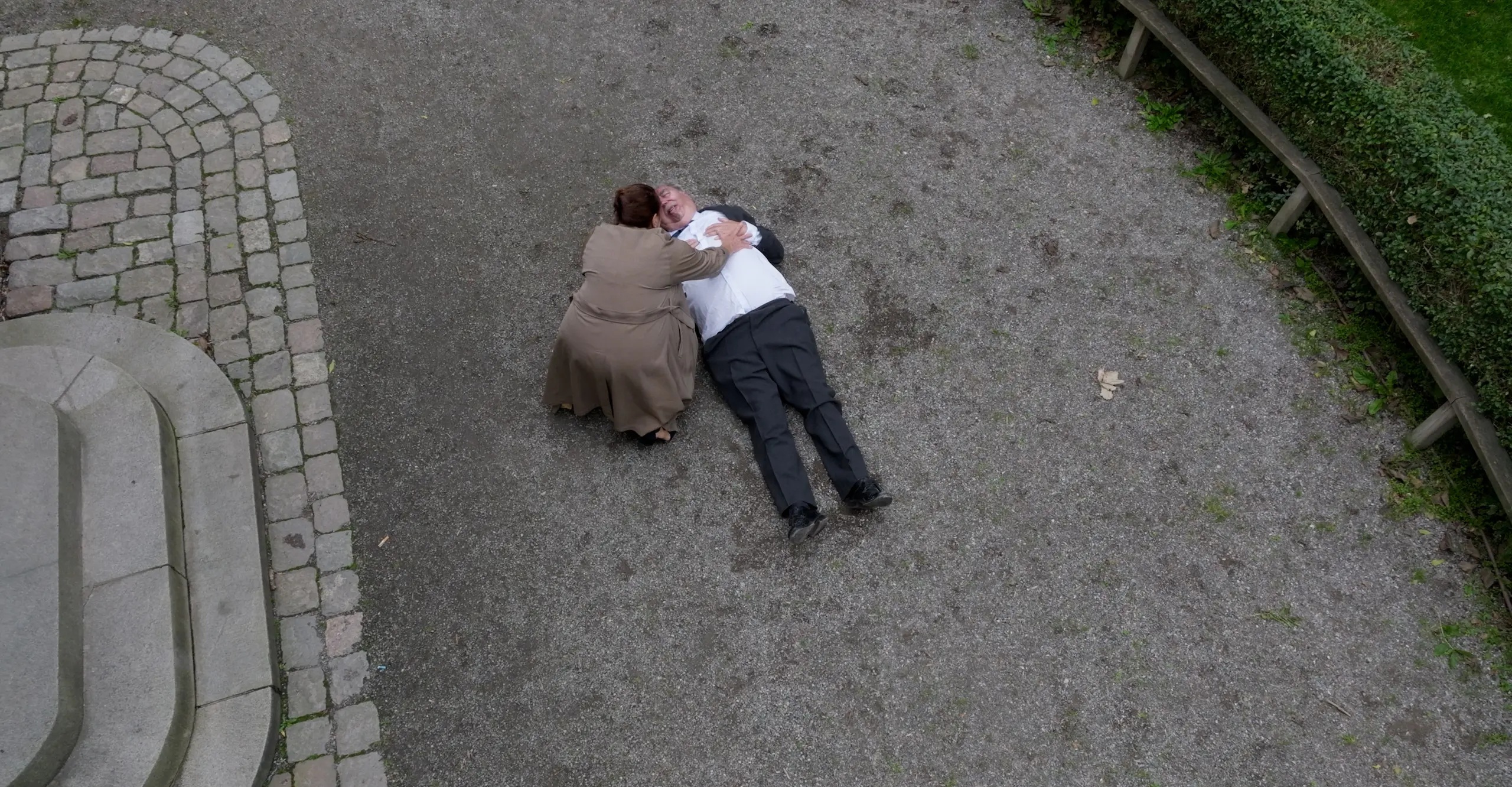
The use of AI raises questions about who or what has agency. What does the shift of this decision-making power away from the individual mean for artists as well as for society, the planet, and the future of humanity?
In this book launch for AI and the Paradox of Agency, a panel of artists and writers consider how their power and decision-making shifts while engaging with AI systems.
The event will also include a screening of Lumen Prize shortlisted film Gravity Will Take Us All by Zeno Gries. The film follows Norbert Wiener, the originator of cybernetics, who has collapsed while on a lecture trip. As the drone's eye view starts moving up and over the streets of Stockholm, a dreamy and at times delirious introspection into his mind is heard.
The film constructs a fictionalised account of Wiener’s final moments in Stockholm in 1964 to examine cybernetics and its future implications for humanity, society, and technology. Wiener’s monologue consists of original audio from his lectures and a speculative text, spoken by an AI-generated approximation of his voice. Distinctions between humans and machines become blurry. Who is speaking?
The book AI and the Paradox of Agency accompanies an exhibition at Bildmuseet, in Umeå, Sweden until January 2027.
Pre-order the book as part of your event ticket:
Book ticketsSarah Cook
Sarah Cook is a curator, researcher, writer, and professor in Museum Studies in Information Studies at the University of Glasgow. She holds the WASP-HS guest professorship in Art and AI with UmArts, Bildmuseet and the School of Architecture at Umeå University. She has curated and co-curated over fifty international exhibitions most featuring new art commissions about how we live in a technological world.
Dennis Delgado
Dennis Delgado’s work examines the forms through which ideologies of colonialism persist and re-inscribe themselves, revealing a historical presence in the current moment. He is interested in how technologies of vision reproduce the scopic regimes of expansionism and neo-liberal governance. Dennis Delgado received a BA in Film Studies from the University of Rochester as well as an MFA in Sculpture from the City College of New York. His work has been exhibited at the Bronx Museum of the Arts, the Schomburg Center for Research in Black Culture, UC Irvine, UT Austin, Palo Alto Center for the Arts, El Museo del Barrio, and at the Cooper Union.
Zeno Gries
Zeno Gries has an open-ended approach to artistic work, deliberately relinquishing control over certain aspects of the creative process. This methodology often leads them to collaborate with scholars, actors, nonhumans, and other artists from various disciplines. Zeno Gries utilizes a diverse and ever-evolving range of new media, with a primary focus on film, video, and software. Recent fellowships and grants include the talent film development scholarship by the Kuratorium junger deutscher Film, a residency at UmArts, Umeå, Sweden, and a scholarship as Styria-Artist-in-Residence in Graz, Austria.
Charlotte Kent
Charlotte Kent is an arts writer and Associate Professor of Visual Culture at Montclair State University. She specializes in twentieth- and twenty-first-century art, digital culture, and emergent technologies. She is the co-author and co-editor of multiple books, a regular contributor to magazines and journals, and an Editor-at-Large for the Brooklyn Rail, where she writes a monthly column on Art & Technology. She serves on the College Art Association’s Committee for Intellectual Property.
Alasdair Milne
Alasdair Milne is a researcher in the philosophy of technology, with a focus on machine learning R&D and its cultural implications. He completed his Ph.D. with Serpentine Galleries and King’s College London in 2025, where he is part of the Creative AI Lab. He is a Postdoctoral Research Associate in Information Studies at the University of Glasgow and a Researcher at Antikythera.
Florian Model
Florian Model explores emergent behavior and the double bind between the individual and society. Working through the notion of play, he simulates complex systems with AI and participatory social experiments, drawing on sociology, economics, and technology. Past fellowships and grants include a residency at Cité Internationale des Arts, Paris, France; the Goethe-Institut residency in Rijeka; a fellowship at Akademie Schloss Solitude; and a production grant from Stiftung Kunstfonds, Germany, which he used to pay three workers to do nothing for one month. His work has been exhibited at House Conspiracy, Brisbane, Australia; Center for Innovative Media, Rijeka, Croatia; KL8, Brussels, Belgium; Akademie Schloss Solitude, Stuttgart, Germany; and Jupiter, Hamburg, Germany.
Further speakers to be confirmed.
By booking for this event you agree to our Terms & Conditions.