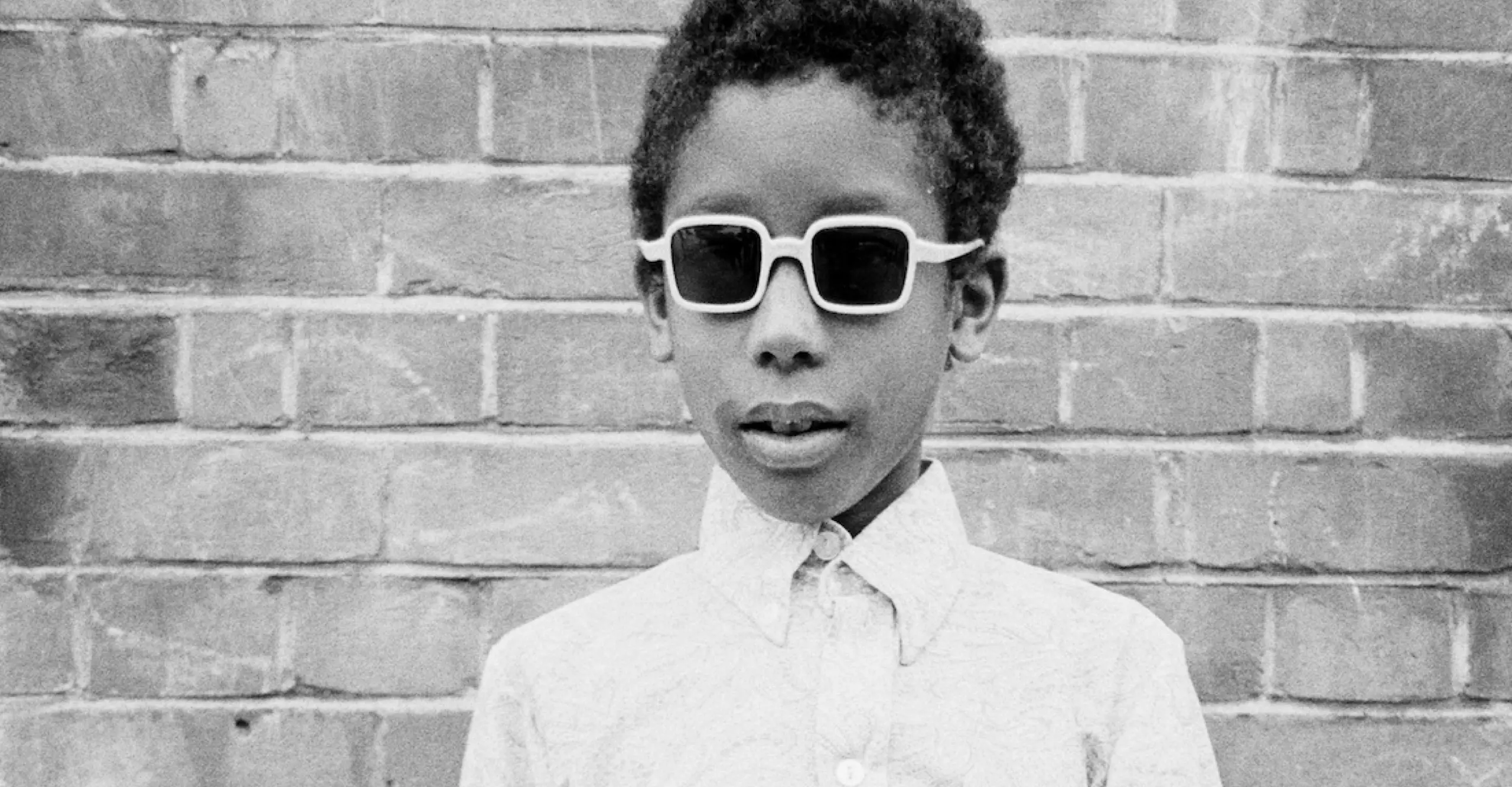
This event brings together artists, researchers and local activists to reflect on photography and its role in capturing the experiences, struggles and solidarities of Black and Asian lives in 1970s and 1980s Britain.
Drawing on Dennis Morris’ photography, the day will critically examine anti-discriminatory legislation during this period in Britain, exploring representations of everyday life in working-class communities and intersections across the Black and Asian migrant experiences. Through discussions on photography and visual media, we will consider how these representations have shaped narratives of race, identity and the complex notion of belonging in Britain.
Themes covered include: photography as a tool for resistance, remembrance and community-based storytelling, while examining broader themes of image ethics, cultural memory and political organising.
Hear a range of perspectives and take part in discussions that will look back and forward to photography’s role in shaping our understanding of social and cultural histories. Contributors include writer Hamja Ahsan, curators and art historians Dr Jasmine Chohan, Dr Alice Correia and Emma Lewis, activist Suresh Grover (founder of the Southall Monitoring Group), filmmaker and researcher Julian Henriques, and artist Symrath Patti.
The day will conclude with an informal keynote by curator and writer Renée Mussai, who will discuss her recent book Black Chronicles: Photography, Race and Difference in Victorian Britain (2025, co-published by Thames & Hudson and Autograph). Her reflections will provide a broader genealogy of Black representation in British photography, offering a closing perspective on the day’s conversations.
With support from the Paul Mellon Centre for Studies in British Art.
12.05 Panel 1: Resistance, Solidarity and Political Organising
This section focuses on grassroots political organising and practices of resistance in the 1970s and 1980s, and their ongoing legacies. Symrath Patti will share insights from her artistic practice, exploring how cultural expression intersects with political struggle, with reflection on Dennis Morris’ series on Southall. Suresh Grover (Southall Monitoring Group) will draw on the organisation’s archive and his activist histories to reflect on community resistance to racism and state violence. Presentations to be followed by a discussion moderated by Emma Lewis (Turner Contemporary).
14.00 Panel 2: Black and Asian Solidarity: Shared Struggles and Diverging Histories
This session explores how photography has documented and shaped Black and Asian solidarities, as well as the tensions and divergences within them. Starting with a film by Hamja Ahsan and a presentation by Alice Correia, who will look at the work of Mumtaz Karimjee, there will also be an open discussion with Taous Dahmani (TPG) on the research and publication of Shining Lights.
15.30 Panel 3: Everyday Life, Legacy, Expression
Looking at the politics of the everyday, this session considers how music, photography and artistic practice have reflected and shaped collective identity, resistance and belonging. Julian Henriques will discuss sound, music and cultural expression in Britain’s diasporic communities, connecting these legacies to broader visual and political struggles. Moderator: Jasmine Chohan (Tate).
16.30 Talk: Renée Mussai
Renée Mussai will close the day with an informal keynote drawn from her acclaimed curatorial research and recent book project Black Chronicles: Photography, Race and Difference in Victorian Britain. Her illustrated lecture will expand the scope of the symposium by situating the themes within a longer genealogy of photographic practice, race and representation in Britain — tracing connections across time to Victorian-era imagery.
Programme
Biographies
Hamja Ahsan
Hamja Ahsan is a award-winning artist, writer, curator and activist based in London. His art practice draws from the language and formats of Liberation movements.
He is best known for the book Shy Radicals: Antisystemic Politics of the Militant Introvert, recently made into a film, that envisions a utopic homeland for quiet, awkward and neurodiverse peoples. He was awarded the Grand Prize at Ljubljana Biennial 2019 for the art work Aspergistan Referendum based on this book. His art practice weaves inside and outside the artworld, progressive movements, muslim diasporic spaces, in the form of speaker-tours, coining critical languages, zine fairs, building archives and collections, as well as exhibition spaces.
He has presented art projects at the NY Art Book Fair at MOMA PS1; Tate Modern, London; Gwangju Biennale; Shanaakht festival, Karachi; and Ujazdowski Castle Centre for Contemporary Art (CCA) in Warsaw and was a resident artist at Jan van Eyck Academie in Maastricht in 2020–21. He is currently working on his 2nd book Radical Chicken about his Documenta 15 project on Halal Fried Chicken shops.
Jasmine Chohan
Jasmine Chohan joined Tate in 2022, from the Courtauld Institute of Art where she was an Associate Lecturer on Modern and Contemporary Asian Art, whilst undertaking her PhD. Although her PhD focused on the Havana Biennial with an emphasis on Cuban contemporary art, her specialisations span across global biennials, contemporary Asian art, and contemporary British diaspora art. Jasmine co-curated The 80s: Photographing Britain (21 November 2024 – 5 May 2025) alongside Yasufumi Nakamori and Helen Little. Jasmine also has an extensive background in education, having been Head of Humanities at Oak Heights Secondary School for four years and previously having worked in the Schools and Teachers team at Tate. She has been focusing on arts education more widely, concentrating on diversity and inclusion by collaborating to ensure the dissemination of British diaspora art to the next generation.
Dr Alice Correia
Dr Alice Correia is a freelance British-Asian Art Historian and curator specialising in late twentieth-century British art, with a focus on Black and South Asian diaspora artists and feminist and de-colonial practices. Her edited book, What is Black Art?: Writings on African, Caribbean and Asian Artists in Britain, 1981-1989, was published by Penguin in 2022. Her chapter “Representing South Asian Women in Britain”, was included in the catalogue for Women in Revolt: Art, Activism and the Women’s Movement in the UK 1970 – 1988, Tate Britain and touring, 2023-25. In 2023 she co-curated the exhibition, A Tall Order: Rochdale Art Gallery in the 1980s at Touchstones Rochdale. She has worked at Tate and the Government Art Collection and has taught Art History at the Universities of Sussex and Manchester. Correia has held Research Fellowships at the University of Salford; the Paul Mellon Centre for the Study of British Art; and the Decolonising Arts Institute, University of the Arts, London.
Suresh Grover
Suresh Grover is the national director of the antiracist group called The Monitoring Group,. He is a veteran of community-based national civil rights campaigns.
Suresh played a central role in the 1976 protests following the racist murder of Gurdip Singh Chaggar in Southall and went on to establish, after the National Front invasion of Southall in 1979, the Southall Defence Committee, to defend 345 people charged with various criminal offences and tried in jury-less courts by special magistrates from Northern Ireland. This led to the formation of the influential Southall Monitoring Group in 1982 which Suresh led, initiating and providing support to hundreds of campaigns both nationally and internationally.
Suresh is acknowledged as an architect of family or community led campaigns having coordinated national campaigns for the families of Blair Peach, Ricky Reel, Stephen Lawrence, Zahid Mubarak and Victoria Climbie, the latter three led to the establishment of Public Judicial Inquiry Inquiries due to institutional failures. Both he and the Monitoring Group were unlawfully spied upon by police and have therefor been granted core participant status at the ongoing Undercover Police Public Inquiry established by the former PM Theresa May to examine spying of protest groups.
Over the last year, he has visited scores of towns and cities across the UK that witnessed by far-right violent riots last year aiming to establish community based networks to challenge racism nd the far right. The Guardian newspaper has named him as one of the 100 most influential persons on social policy in the UK.
Julian Henriques
Professor Julian Henriques is convenor of the MA Cultural Studies programme, director of the Topology Research Unit and co-founder of Sound System Outernational research group in the Department of Media and Communications, Goldsmiths, University of London. Previously Julian was head of film and television at CARIMAC at the University of the West Indies, Kingston, Jamaica. Julian researches street cultures, music and technologies including those of the reggae sound system. He has credits as a writer-director with the feature film Babymother, a reggae musical, the improvised short drama We the Ragamuffin and as a producer with numerous BBC and Channel Four documentaries; a sound artist with the sculpture Knots & Donuts at the Tate Modern, a founding editor with the Ideology & Consciousness journal and as an author with others Changing the Subject: Psychology, Social Regulation and Subjectivity and the monographs Sonic Bodies: Reggae Sound Systems Performance Techniques and Ways of Knowing, and Sonic Media: the Street Technology of the Jamaican Sound System (forthcoming).
Emma Lewis
Emma Lewis is a Curator at Turner Contemporary. Lewis was previously Assistant Curator, International Art at Tate Modern, where she curated the recent Dora Maar exhibition as well as delivering Olafur Eliasson: In Real Life, Modigliani and Wolfgang Tillmans: 2017. Lewis is the author of Photography – A Feminist History (Tate/Ilex 2021) and Guest Curator for Sue Williamson & Lebohang Kganye at The Barnes Foundation, Philadelphia, Pennsylvania (Spring 2023).
Renée Mussai
Renée Mussai is an independent curator, writer and scholar of visual culture, whose research-led work routinely centres Black feminist practices through immersive exhibition, research and publication projects. She holds several academic and institutional affiliations, currently acting as senior research associate at VIAD, University of Johannesburg; guest curator at The Barnes Foundation, Philadelphia; visiting lecturer at Sotheby’s Art Institute, London, and chair of the Deutsche Börse Photography Foundation’s advisory council. Her recent books include the edited volume Black Chronicles—Photography, Race & Difference in Victorian Britain (Thames & Hudson / Autograph, 2025), and the forthcoming, sole-authored anthology Eyes that Commit—A Visual Gathering (Prestel, 2026). Until 2022, she was senior curator and head of curatorial & collection at Autograph where she worked for more than two decades, and in 2023, artistic director of The Walther Collection. In 2025 she was awarded an honorary doctorate by the University of the Arts London for her sustained contributions to photography curation and scholarship.
Symrath Patti
Symrath Patti was born in Kenya and came to Britain in 1967. She grew up in London and studied Fine Art at Leeds Polytechnic between 1981 and 1984. Her work explores themes of femininity and the codification of gendered bodies, embodiment, desire and purification. She explores how the personal and political emerge in dialogues of and about post-coloniality. Patti was a founding member of Panchayat, has exhibited widely and is a featured artist in the Women of Colour Index (WOCI) at the Women’s Art Library, Goldsmiths, University of London. Her wide-ranging curatorial work includes Jagrati, an exhibition featuring thirteen women artists at Citizens Gallery in Greenwich, London, in 1986. Patti curated the work of artists Mona Hatoum, Keith Piper, Chila Burman, Said Adrus, Rasheed Araeen and herself for the 1991 Havana Biennial.
Details on how to access the event will be confirmed upon registration. Please check your junk folders if you haven't received an email from TPG staff confirming your place.
Ticketing
By booking for this event you agree to our Terms & Conditions.


